
Australia
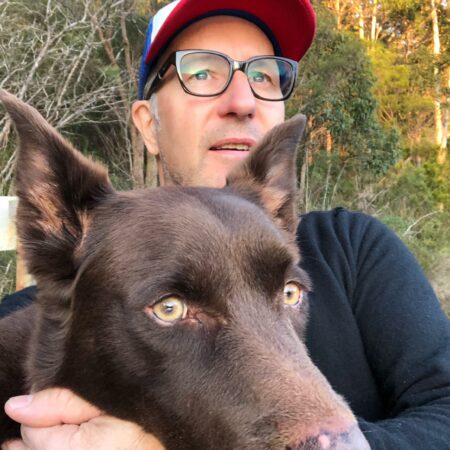
Rod Annear
Assistant Director – Visitor Services, Department of Biodiversity, Conservation and Attractions
Rod Annear been in protected area management for more than 40 years. He has worked as a National Park Ranger, natural area interpreter and has overseen the planning and implementation of capital works developments in parks across Western Australia (WA). He is currently the Assistant Director for Parks and Visitor Services with the Parks and Wildlife Service of the Department of Biodiversity, Conservation and Attractions in WA. Balancing community expectations for facilities and services in parks with available resources and protecting the nature and culture of parks is an ongoing challenge.
He works with a team of creative designers, interpreters, architects and community partners to deliver high quality, innovative experiences and facilities to Western Australian national parks. He can be a bit nerdy when it comes to gadgets and has a weakness for coffee, hazy pale ale and 1970s fashion.
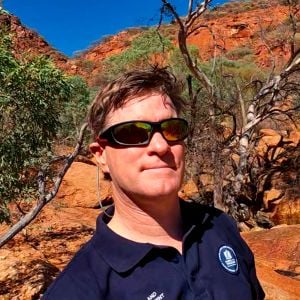
Jamie Bennett
Visitor Risk Management Project Officer, Department of Biodiversity, Conservation and Attractions
Jamie Bennett is a Western Australian outdoor sector leader whose work sits at the intersection of trail experiences, governance, and safe visitor access. He is part of the Department of Biodiversity, Conservation and Attractions Visitor Risk Management team, supporting safer experiences across WA’s parks through hazard identification, user education, and cross‑agency collaboration.
Previously, Jamie served over nine years as Executive Officer of Outdoors WA, strengthening the state’s outdoor ecosystem through advocacy, sector coordination, and professional development—foundations that continue to support trail participation and high‑quality nature experiences. He also led nationally as President of the Outdoor Council of Australia, advancing policy and best‑practice frameworks that underpin safe, consistent adventure‑based programming across jurisdictions. A long‑time trainer of outdoor leaders, Jamie helped organisations interpret and implement the Australian Adventure Activity Standards by translating risk management principles into field‑ready procedures for bushwalking and trail‑based programs. Within the WA trails community, Jamie was involved in pioneering the early development of Trails WA and has supported statewide strategy efforts—including outdoor frameworks and hiking initiatives—to grow participation while embedding safety and environmental stewardship.
Jamie is the Australian representative to the Association for Experiential Education as an APAC Leadership Councillor, contributing to professional standards and knowledge‑sharing across the Asia‑Pacific outdoor education community. A passionate bushwalker and camper, he champions positive practices so that everyone can enjoy trails—and the wider outdoors—safely, sustainably, and with confidence.
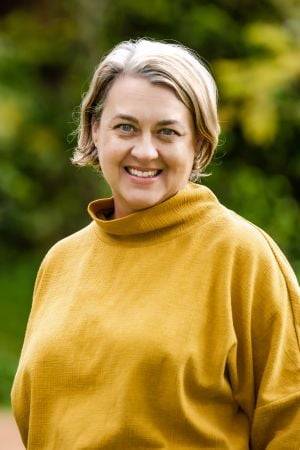
Nicole Botica
Economic and Community Development Coordinator, The Shire of Nannup
Nicole Botica is an Economic and Community Development Coordinator dedicated to supporting regional growth, enhancing community wellbeing, and strengthening the cultural identity of the Shire of Nannup. Guided by the Shire of Nannup Community Strategic Plan 2021–2036, she focuses on delivering projects that build local capacity, preserve community heritage, and create vibrant, sustainable economic opportunities.
A major achievement in Nicole’s portfolio is her leadership in the Trail Town Project, where she played a pivotal role in attracting new mountain bike trail infrastructure to the region. This work has contributed to building high value tourism assets that position Nannup as a premier trail based destination. Nicole’s strategic approach has helped expand the region’s adventure tourism offering, stimulate local business activity, and enhance opportunities for community connection through outdoor recreation.
Nicole is also a key contributor to the Nannup Oral History Project, a 20 episode podcast series capturing the voices, memories, and lived experiences of local residents. In this role, she has overseen editing, content compilation, and quality refinement to ensure the project reflects and celebrates the community’s unique stories and intergenerational knowledge.
Known for her collaborative and community centred approach, Nicole works closely with local organisations, government partners, and residents to bring meaningful projects to life. She embraces digital tools and continually expands her skillset to strengthen project delivery, community engagement, and strategic communication. Nicole’s work consistently uplifts community aspirations, builds sustainable outcomes, and honours the spirit and identity of Nannup.
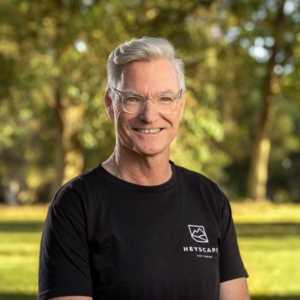
Tim Brady
Head of Heyscape, Heyscape
Tim Brady is the driving force behind Heyscape, a Western Australian off-grid accommodation business focused on creating low-impact, design-led stays that connect people more meaningfully with nature and place.
Under Tim’s leadership, Heyscape has grown into one of Western Australia’s emerging ecotourism operators, delivering premium off-grid accommodation experiences that support slower, more sustainable regional travel while working closely with landowners, tourism organisations, and local communities.
With a strong interest in regenerative tourism, trail-based visitation, and nature-led regional development, Tim is passionate about how thoughtful tourism infrastructure can help unlock long-term environmental, social, and economic value for regional destinations. Heyscape’s Denmark property, located alongside the Munda Biddi Trail, reflects this philosophy by combining low-impact accommodation, landscape-sensitive design, and outdoor recreation experiences that encourage guests to engage more deeply with Western Australia’s natural environment.
At the World Trails Conference, Tim joins representatives from government, conservation, tourism, and trail organisations to discuss the opportunities and challenges shaping the future of trail tourism and nature-based visitor experiences in Australia.
Katie Brown
Chief Executive Officer, Outdoors WA
David Carter
Planning and Technical Officer – Urban Mobility, Department of Transport and Major Infrastructure
David Carter is a transport planner working in the active transport at DTMI, having previously worked in local government with a focus on sustainable transport. With DTMI, David has overseen design, construction and strategic projects developing active transport in regional WA. Through his work engaging with regional shires, he understands the value of active transport infrastructure – in particular rail trails – as a tourism attractor throughout regional WA.

Jackie Crooks
Director Tourism Experience Development, Tourism Western Australia
Jackie has been involved with the tourism and sports industries for over 25 years including a combined 14 years at Tourism WA across the events, marketing and destination development teams. Jackie is a passionate advocate for the WA tourism industry, having been responsible for the development of the Jina: Western Australian Aboriginal Tourism Action Plan and is currently managing the team responsible for growing the density and diversity of tourism attractions and experiences in and around WA’s spectacular national parks and overseeing cruise tourism.
Preston Culbong
Cultural Literacy Consultant, Aboriginal Education Solutions
Preston is a Nyoongar Yamatji man with community and tertiary level experience in youth work, research, human rights and social justice. This informs his work as a cultural literacy consultant. He is currently working with Water Corporation and the City of Stirling.
In addition, he is a writer, consultant and facilitator of professional learning for Aboriginal Education Solutions.
Preston believes it is important that centuries old Aboriginal cultural knowledge and traditions passed down to him remains intact and understood.
Dr Stewart Dallas
Ecological Engineer
Dr Stewart Dallas is a civil engineer with a PhD in Environmental Science in the field of Ecological Engineering and has over 30 years experience both nationally and internationally in the design, construction and management of various water and wastewater related projects. Stewart established the not-for-profit Greywater & Wastewater Industry Group (GWIG) in Western Australia, was a director of the former Environmental Technology Centre at Murdoch University, where he maintains a role as an adjunct senior lecturer in the School of Environmental Engineering. Stewart is passionate about environmental stewardship and has hiked many trails around the world including Patagonia, Tasmania, Scotland and in his own backyard – the Bibbulmun Track.
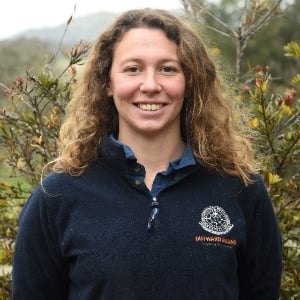
Helene de Lagillardaie
Head of Operations, NatCORR – National Centre for Outdoor Risk and Readiness
Helene is the Head of the National Centre for Outdoor Risk and Readiness. Prior to this, Helene worked with Outward Bound Australia as Head of Operations, managing program delivery and field operations across Australia for over 6 years. Helene worked in the field as a Group Leader and Program Coordinator across Australia, England and Canada and studied and trained in Outdoor Leadership in France, Norway, Canada, England and Australia. Over her time in the role of Head of Operations, Helene coordinated numerous incidents and emergency responses ranging from extreme weather events to critical incidents.
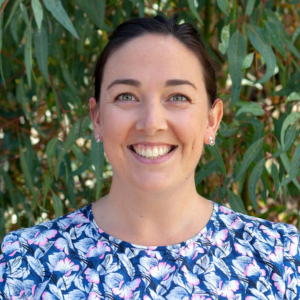
Georgia Ellis
Operations Manager, Break the Boundary Inc.
Georgia Ellis is the Operations Manager and a Committee Member at Break the Boundary Inc., a Perth Hills–based charity supporting people with physical and neurological disabilities to access the Western Australian bush through adaptive hiking and mountain biking.
An allied health professional and passionate hiker, Georgia joined Break the Boundary as an Adaptive Hiking Leader during its inaugural recruitment wave. She has since moved into a leadership role, where she has played a key part in auditing and digitising the organisation’s adaptive hiking programs, and in developing robust clinical and operational policies that prioritise safety, consistency, and participant experience. Georgia has led the recruitment and training of 11 Adaptive Mountain Bike Coaches and helped design Australia’s first dedicated adaptive mountain biking program – one that is streamlined, supportive, and grounded in best practice, while still preserving the freedom and joy of trail riding.
Her work is driven by a deep belief in inclusion, community, and volunteer support, and by witnessing the impact of outdoor access for people who may not have been able to return to the bush since acquiring a disability. Georgia believes everyone deserves the opportunity to experience the outdoors – off flat surfaces, and into nature.
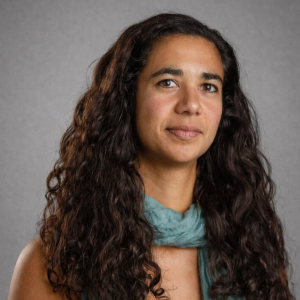
Su‑Mita Hill
Chief Executive Officer, Bibbulmun Track Foundation
Su‑Mita Hill is the Chief Executive Officer of the Bibbulmun Track Foundation, a member-based organisation dedicated to the stewardship, enjoyment, and long-term sustainability of Western Australia’s iconic 1,000‑kilometre Bibbulmun Track. With a background in law, climate science, and education, Su‑Mita works at the intersection of trail management, education, volunteerism, and wellbeing. Her work focuses on strengthening partnerships between government, community, and volunteers to ensure long-distance trails continue to deliver environmental, social, and economic benefits for future generations.
Su‑Mita is a lifelong hiker with experience on trails across North America, Central America, Europe, and Asia, including the Lycian Way, multiple Camino routes, Everest Base Camp, Acatenango, Angel’s Landing, the Grand Canyon, and various alpine day hikes in Canada. She also completed an end‑to‑end hike of the Bibbulmun Track in 2019, deepening her understanding of its environmental, cultural, and community significance.
Su‑Mita brings a grounded, values-led approach to leadership. She is particularly passionate about the role trails play in supporting education and physical and mental health, fostering connection to land, and building resilient communities. In her role as CEO of the Bibbulmun Track Foundation since January 2026, she oversees programs that support walkers, volunteers, and land managers, while advocating for the Bibbulmun Track as a world-class trail and a shared community asset.
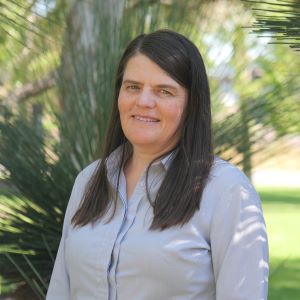
Angela Jakob
Trails Officer, City of Kwinana
Angela Jakob is the Trails Officer at the City of Kwinana, a local government authority in Western Australia. In this role, she is leading the upgrade and activation of the City’s trail network, with a key focus on the Kwinana Loop Trail, enhancing opportunities for recreation, connection and place-based experiences. Angela brings extensive experience to the role, having previously worked for 16 years as an Environmental Officer with the City of Kwinana. During this time, she was responsible for establishing community-focused revegetation, environmental education programs, and delivering a range of natural resource management projects aimed at conserving and enhancing the City’s reserves and their associated flora and fauna.
Angela’s peak life experiences include a summer season working on trail projects in Alaska with the Southeast Alaska Guidance Association—where avoiding bears and giant mosquitoes was part of the daily routine— as well as travelling across Australia with her family, with a visit to Uluru being a key highlight. In her spare time, you will find her in the garden, on a trail somewhere or weeding in her local patch of bushland with a local community group.
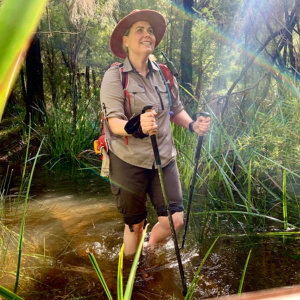
Tracy Jones
Founder, Director & Guide, Off the Beaten Track WA
Tracy Jones is the Founder and Director of Off The Beaten Track WA, an award-winning hiking and adventure tourism business she established in 2017. What began as an inspirational trails and outdoor blog has evolved into one of Western Australia’s leading guided hiking operators, recognised for its innovation, impact, and commitment to inclusion.
Tracy is a recognised leader in accessible and inclusive tourism. In 2022, she launched Hike-Ability, a one-to-one supported hiking program that uses movement and nature connection to support people living with disability. Designed through lived experience and collaboration, the program demonstrates how small, intentional changes can create powerful outcomes for individuals and communities. Under Tracy’s leadership, Off The Beaten Track WA has been awarded the WA Excellence in Accessible Tourism Award in both 2023 and 2025. In 2024, Tracy was named a Business News 40 Under 40 Award winner, recognising her entrepreneurial leadership and sector influence.
In 2025, alongside her wife, Tracy also launched Trail Tales WA, a podcast dedicated to accessibility, inclusion, and the stories shared on the trails, further amplifying voices often underrepresented in outdoor spaces. Through trails and adventure, Tracy and her team continue to expand access to nature, challenge traditional models of tourism, and improve lives—one step and one adventure at a time.

Therese Logue
Executive Officer, Munda Biddi Trail Foundation
Therese Logue joined the Munda Biddi Trail Foundation in 2023 as Executive Officer, bringing a clear and purposeful vision to build organisational capacity, elevate the Trail’s profile, and strengthen stewardship of one of the world’s longest nature-based, off-road cycling experiences.
Therese has a long-standing connection to the Trail, having pioneered the first stage of the Munda Biddi Trail project from 2000–2006. Drawing on experience across government, small business, and the not-for-profit sector, she works closely with the MBTF Board and a small team to advocate for the Trail and engage more than 125 volunteers and 500 members, delivering lasting environmental, social, and tourism benefits across South West Western Australia.
Driven by a lifelong passion for off-road cycling and a deep connection to people and place, Therese is committed to leaving a meaningful legacy. She gives back to the Trail she helped create by strengthening connections between people, culture, communities, and regional businesses, whilst protecting the unique landscapes that make the Munda Biddi Trail a truly world-class adventure.
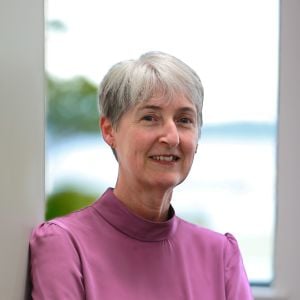
Lenore Lyons
Director, Concept 2 Strategy
Dr Lenore Lyons has had a successful career as a senior manager in the not-for-profit, private and education sectors, specialising in strategic planning and business and product development. She began her career in the university sector as a social researcher specialising in social transformation in East and Southeast Asia and has lived and worked extensively across the Asia-Pacific.
Moving to the South Coast of Western Australia in 2006, Lenore and her husband established a successful ecotourism business showcasing the region’s unique biodiversity and heritage. Winning numerous awards at the local, state and national level, that business was inducted into the Western Australian Tourism Hall of Fame for Ecotourism in 2015.
In 2017, Lenore was appointed CEO of the Great Southern Centre for Outdoor Recreation Excellence (Outdoors Great Southern). She currently works as a consultant helping tourism businesses and destination marketing organisations to build capacity and grow the nature-based, trails and adventure tourism market.
Lenore has served on the Board of Directors of numerous professional associations, state peak bodies, and regional associations, including Outdoors WA, Trails WA, and the Munda Biddi Trail Foundation. She is currently Chair of Australia’s South West (ASW) Regional Tourism Organisation, and a Board Director of South Coast Natural Resource Management (SCNRM).
In 2025, she was awarded the inaugural Len Smith Medal for Outstanding Individual in Tourism. A passionate advocate of sustainable and responsible travel, Lenore has a strong interest in environmental education and regenerative tourism.
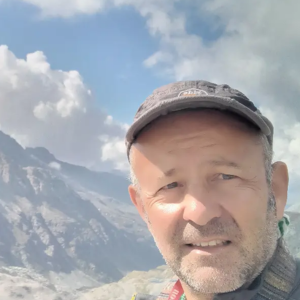
Ewen MacGregor
Parks and Visitor Services Leader, Parks and Wildlife Service, Department of Biodiversity, Conservation and Attractions
Ewen started his career in outdoor recreation management as TrailsWest project officer with the Department of Sport and Recreation in 1995. His main role was setting up the Lotteries Trails funding program. Subsequently, Ewen worked in the United Kingdom in various Outdoor Recreation strategic roles for numerous land management agencies, including Natural England, the Countryside Agency and the Department of Environment, Food and Rural Affairs (DEFRA). Working closely with National Trail Managers allowed him to develop a deep insight into trail management strategies utilised in the United Kingdom and further afield.
Ewen has worked for the Parks and Wildlife Service at the Department of Biodiversity, Conservation and Attractions since 2010. As Parks and Visitor Services leader of the Perth Metro Region. He has overseen the huge investment in trails in recent years and the development of the Pinjar ORV area.
In his spare time Ewen is also a keen trail user having travelled around the United Kingdom, Europe, Canada, USA, Australia and New Zealand to follow his passion for off road motorcycling and mountain biking. His enthusiasm for trails from both a user’s perspective and as a trail manager will be obvious in his presentation.

Philip McAleese
Co-Founder, Active Travel Insights
Philip McAleese is Co-Founder of Active Travel Insights, which represents Eco-Counter in Australia, and Co-Founder and CEO of See.Sense, a smart cycling technology company whose sensor-equipped devices turn everyday rides into anonymised insight on how people actually move.
Over the past decade he has worked with cities, councils, park managers and transport agencies across Australia, the UK and Europe on programmes that use movement data to support design, safety and funding decisions — from large-scale rider-borne sensing trials to permanent counting networks.
He is particularly interested in what happens when hard counts are combined with qualitative feedback from the people using a trail: the point where data stops describing use and starts justifying investment.
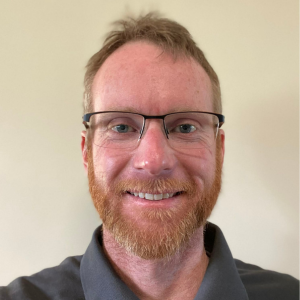
Clint Morgan
Deputy Chair, Break the Boundary Inc.
Growing up in the 1990s, Clint always lived an active life and loved spending time outdoors – whether camping, fishing, or riding bikes. In 2016, Clint sustained a spinal cord injury that left him paraplegic. This life-changing event didn’t stop him from pursuing an active lifestyle. He continued to explore a wide range of interests, including golf, basketball, abseiling, and creative hobbies such as metalwork and woodworking. With a strong desire to stay outdoors and connected to community, Clint joined Break the Boundary started to get back into riding. He is now the Deputy Chairperson, helping drive the growth of adaptive mountain biking and adaptive hiking in Western Australia. Clint’s experience and passion has helped design Australia’s first dedicated adaptive mountain biking coaching program in the Perth Hills. This passion has lead to purchasing a bike of his own to be actively involved in the community, embracing a sport that brings people together and can be enjoyed at many levels by the broader community.

Sue Morley
Trail Project Officer, City of Stirling
Sue-Anne Morley blends psychology, culture, and connection in her approach to trail design. With a background in Environmental Psychology, she explores how people interact with place and how interpretative signage can turn trails into meaningful and engaging experiences.
An experienced long‑distance hiker, Sue’s professional journey includes managing over 1,000 km of the Bibbulmun Track, giving her a deep insight into trail experiences and community stewardship. In her current role as Trails Project Officer at the City of Stirling, she focuses on creating urban bushland trails that are inclusive experiences for people of all cultures and abilities.
Her work is strongly influenced by years spent collaborating with Aboriginal Elders, embracing the principle of caring for country. Through her lens, trails become pathways that connect hearts, homes, and habitats.

Wendy Muir
Principal Regional Development Officer, Peel Development Commission
Wendy Muir is the Principal Regional Development Officer at the Peel Development Commission in Mandurah, where she is responsible for leading key initiatives aimed at attracting both government and private investment, to drive economic growth and enhance community resilience throughout the Peel region.
Wendy relocated to Australia in 2006, previously working as a Defence research scientist for the UK and then Australia in Melbourne, before settling in the Peel region, which she now considers the best place to live and work. Currently, Wendy’s efforts are concentrated on strengthening the Peel region’s tourism sector. Her focus areas include nature-based tourism, trail development, geotourism, and the enhancement of cultural experiences. Wendy is actively involved in initiatives that showcase the unique natural and cultural assets of the region, which spans from Mandurah, Serpentine-Jarrahdale, and Murray, down to Waroona and Boddington.

James Pearse
Regional Representative, Rail Trails Australia
James is an experienced transport planner and civil engineer based in Perth, Western Australia. His interest in rail trails started after he developed a series of long-term cycling strategies for regional WA. Growing up in the Wheatbelt region, James’ interest in rail trails sits at the intersection of three of his passions: civil engineering, active transport and regional economic development. Among his favourite rail trails are the Railway Reserves Heritage Trail in the Perth hills and the soon-to-be-completed Wadandi Track, which will link Busselton to Augusta. James is excited by the enormous potential to expand and enhance WA’s rail trail network. James commenced as a regional representative for Rail Trails Australia in 2019.
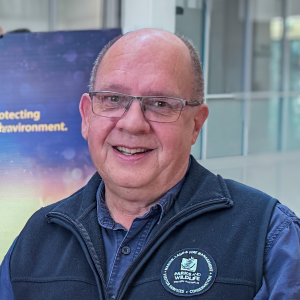
Michael Phillips
Visitor Risk Management Coordinator, Department of Biodiversity, Conservation and Attractions
Michael Phillips is the Visitor Risk Management Coordinator with the Department of Biodiversity, Conservation and Attractions (DBCA), specialising in the safety of trails, natural sites and high use recreation areas across Western Australia. His work covers the full spectrum of risks encountered on trails and nature-based routes—extreme heat, rugged terrain, strong currents, isolation and rapidly changing conditions—with a focus on how everyday visitors perceive and respond to these hazards. Widely regarded as an authority in visitor risk management, Michael delivers specialised training in hazard assessment, trail-based decision making, emergency communication and visitor behaviour analysis. He has also represented Parks and Wildlife in numerous coronial inquiries, providing expert insight into trail conditions, signage decisions, hazard visibility and the risk frameworks applied across WA’s parks.
Michael’s commitment to safer trails extends into peer reviewed research. He coauthored “Monitoring visitor injury in protected areas – analysis of incident reporting in two Western Australian parks” (Journal of Outdoor Recreation and Tourism, 2019), analysing multiyear incident data to understand injury patterns along major trail networks. He also coauthored “Making use of visitor incident data in Karijini National Park: A Western Australian case study,” demonstrating how data from gorge walks and high difficulty trail routes can shape hazard communication and management strategies.
A Perth Hills nature and bird photographer, Michael spends extensive time outdoors allowing him to observe seasonal shifts and landscape conditions that influence visitor safety. Across trail management, research and field observation, his work reflects one message: when people understand natural hazards, they can experience Western Australia’s landscapes more safely, confidently and respectfully.

Joby Rand
Senior Operations Officer – Joint Management Bunuba and Gooniyandi, Department of Biodiversity, Conservation and Attractions
Joby Rand works as a Senior Operations Officer with nearly a decade of experience working alongside Bunuba Joint Management partners within the Department of Biodiversity, Conservation and Attractions (DBCA) in the Kimberley. Joby’s commitment to joint management is reflected in his hands-on approach, reliability, and long-term investment in people and place. Across nearly 10 years, he has supported cooperative decision making, led capacity-building within ranger teams, and helped ensure DBCA’s operational work aligns with Bunuba aspirations for caring for Country.
Joby will be joined by Bunuba Traditional Owners as members of the Miluwindi sub-committee and the Bunuba Rangers who were instrumental in project planning, design, construction, and ongoing management of the trail.

Caro Ryan
Outdoor Advocate and LandSAR Volunteer, LotsaFreshAir
Caro Ryan OAM is an outdoors advocate, search and rescue volunteer, travel writer and award-winning producer. After witnessing too many preventable incidents in the bush, she founded hiking website LotsaFreshAir in 2012. The site is dedicated to getting people into the outdoors safely and has grown to a community of over 88,000 people.
Driven by a commitment to connect people with wild places in meaningful ways, Caro teaches wilderness navigation, authored “How to Navigate: The Art of Traditional Map and Compass Navigation in an Australian Context”, and hosts “Rescued: An Outdoor Podcast for Hikers and Adventurers”, which has achieved 83,000+ downloads over 19 episodes.
With over 20 years of search and rescue experience, she has held the role of search manager for some of the largest and longest land searches in NSW history. As NSW State Emergency Service Deputy Unit Commander for Bush Search and Rescue, she leads 60+ volunteers in the rugged and remote Blue Mountains and surrounding areas.
A regular guest on ABC radio and media expert on hiking and land search and rescue, her travel writing appears in Wild Magazine, Great Walks Magazine, BBC Travel and Australian Traveller. Her awards include recognition from the Australian Society of Travel Writers and the World Media Festival, Hamburg. Caro presented at the IUCN World Parks Congress (2014) and has spoken at conferences including We Are Explorers and the Women’s Adventure Travel Summit. As a producer of interpretive experiences, she creates immersive audio tours for NSW National Parks and Wildlife Service, connecting visitors to the landscape through story and place.
Living on Gundungurra Country in the Blue Mountains, NSW, Australia, Caro balances her rescue work with inspiring the next generation of outdoor enthusiasts to build competence, confidence and connection with the natural world.
In 2026, she was awarded the Medal of the Order of Australia (OAM) for services to outdoor recreation.
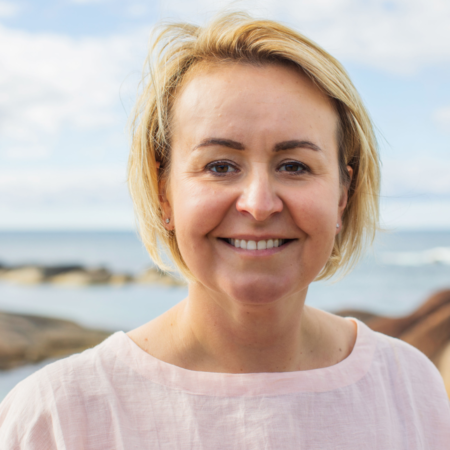
Agata Sleeman
Chief Executive Officer, Trails WA
Agata (Ag) Sleeman (She/Her) is a leading advocate for trails, outdoor recreation and immersive tourism. As CEO of Trails WA, she provides strategic leadership to strengthen Western Australia’s trail network and support sustainable, inclusive and community-led trail development.
With more than 28 years’ experience across marketing, tourism and stakeholder engagement, Ag has helped position Trails WA as a trusted digital and data partner for the sector, delivering initiatives such as Trail Town Accreditation and the Trail Friendly Business Program. She brings a practical, systems-focused perspective on the role of trails in wellbeing, tourism, conservation and regional development.
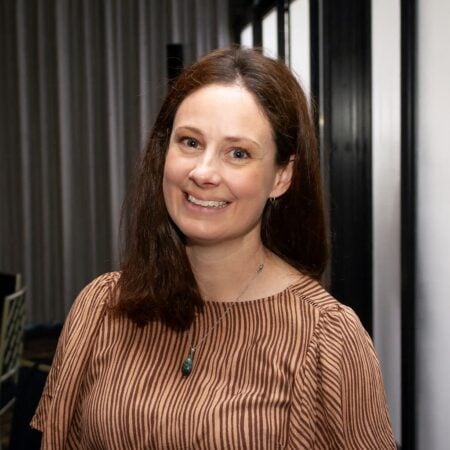
Danielle Stone
Senior Project Officer, Department of Transport and Major Infrastructure
Danielle has been involved in active travel and outdoor recreation and trails for over 15 years. Spending eight years working in trails management and development with the Department of Biodiversity and Conservation, involved in the management of the Bibbulmun Track, Munda Biddi Trail, and planning for the Wambenger, Woodtijup and Dwellingup mountain bike trail networks. At the Department of Transport and Major Infrastructure Danielle has been involved in active travel planning and delivery, most recently leading the Armadale Line Active Travel project, and is now coordinating the Wadandi Track project.
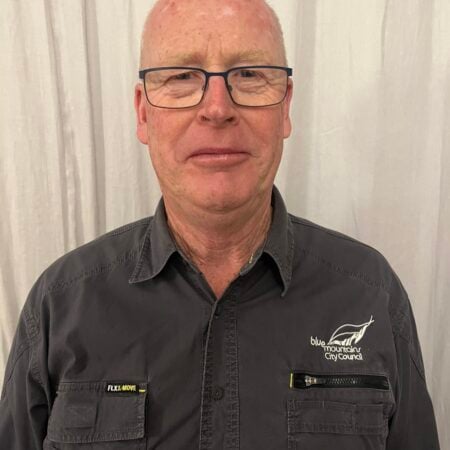
Damien Taylor
Project Engineer Visitor Facilities, Blue Mountains City Council
With over 30 years’ experience in construction and design, Damien Taylor brings extensive industry knowledge and a practical, solutions-focused approach to the delivery of complex infrastructure projects in natural areas. He holds a Bachelor’s Degree in Technology (Civil Systems) and is currently employed as a Project Engineer with the Blue Mountains City Council’s Natural Area Visitor Facilities Team.
In this role, Damien is responsible for the planning, design, construction, and project management of a range of visitor infrastructure across some of the region’s most challenging environments. His work often involves sites that are remote, difficult to access, or highly exposed, including creek corridors and cliff faces. The asset portfolio also includes some significant structures and heritage sites. Successfully delivering in these conditions requires not only technical expertise, but also careful planning, adaptability, and a strong emphasis on safety and environmental stewardship.
Damien leads multidisciplinary teams to integrate cutting-edge technology with innovative design and quality construction. His approach is highly responsive to both site conditions and end-user needs, ensuring that each project balances functionality, durability, and user experience.
He and his team are committed to delivering world-class, sustainable infrastructure in the Blue Mountains City Council’s natural areas that prioritise longevity, accessibility, and value for end users, both the significant tourist visitation as well as the local community.
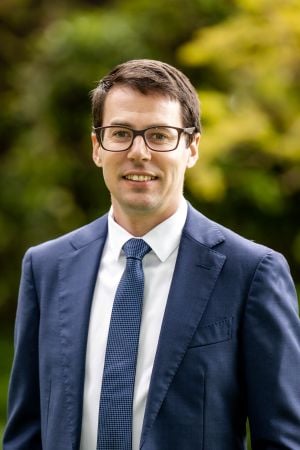
David Taylor
Chief Executive Officer, The Shire of Nannup
Mr David Taylor is the Chief Executive Officer of the Shire of Nannup, recognised for transforming the organisation from a maintenance‑focused shire into a development‑driven local government with a clear, ambitious, and sustainable long‑term vision. Under his leadership, the Shire has significantly strengthened its capacity, broadened its strategic outlook, and increased its ability to deliver high‑impact infrastructure and community initiatives.
David is deeply engaged in all aspects of the Shire’s operations. His leadership style is proactive, informed, and highly connected across teams and projects. This whole‑of‑organisation approach ensures that community outcomes, operational priorities, and strategic planning remain aligned and consistently forward‑looking. A major highlight of David’s leadership has been his instrumental role in shaping the vision for the Nannup Arts, Recreation, Tourism and Liveability (NARTL) Masterplan. His guidance helped establish a comprehensive, future‑focused framework to enhance Nannup’s trail network, public spaces, cultural experiences, and long‑term economic resilience. The NARTL Masterplan now serves as a cornerstone strategic document supporting nature‑based tourism, liveability, and sustainable community growth. David’s dedication to building a vibrant, resilient, and prosperous community is evident in every initiative he leads. His commitment to sustainable development, organisational excellence, and collaborative governance continues to guide the Shire of Nannup toward a thriving future.
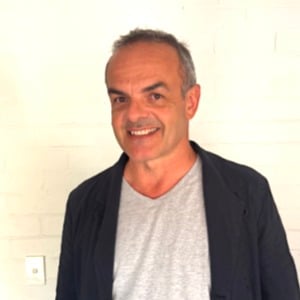
Pascal Veyradier
Jarrahdale Trail Coordinator, Shire of Serpentine Jarrahdale
Pascal Veyradier is a leader in outdoor recreation and community development in Western Australia, with a strong focus on improving access to nature and strengthening trail opportunities. He has played a major role with HikeWest, the state’s peak body for hiking and bushwalking, serving on the Board and as President. During this time, he supported initiatives that increased participation, strengthened advocacy for trails, and encouraged more inclusive community involvement.
At a local government level, Pascal works as Trails Coordinator with the Shire of Serpentine–Jarrahdale, where he leads trail planning and delivery projects that support the establishment of Jarrahdale as a trail and tourism destination. His work brings together advocacy, practical delivery and community engagement to connect people with Western Australia’s natural landscapes in safe and sustainable ways.
Brazil
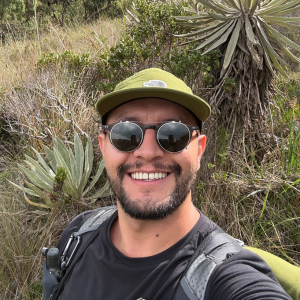
Cesar Aspiazu
Programs Director – Pan American Trails, World Trails Network
Cesar Aspiazu is a sustainability researcher and practitioner specializing in the governance of long-distance trail systems and their role in biodiversity conservation and community development. He serves as Executive Director of the Bolivian Trails Network and Projects Director of Pan American Trails (WTN Americas).
His work focuses on strengthening governance models, institutional arrangements, and collaborative frameworks that enhance the effectiveness of trail systems as tools for ecological connectivity, sustainable tourism, and local empowerment. Cesar has led and supported initiatives across Latin America, particularly in biodiversity hotspots such as the Tropical Andes, the Cerrado, and the Amazon. He has direct experience supporting the creation, expansion, and consolidation of protected and conserved areas (PCAs) in the Amazon, working with local communities, government agencies, and civil society organizations to advance participatory governance, territorial planning, and conservation strategies at landscape scale.
Cesar recently completed his PhD in Sustainability at the University of Brasília, where his research examines the intersections between conservation, governance, and long-distance trails. His professional experience includes collaboration with NGOs, government agencies, and international networks to design and implement trail-based conservation strategies that contribute to biodiversity protection and community resilience.
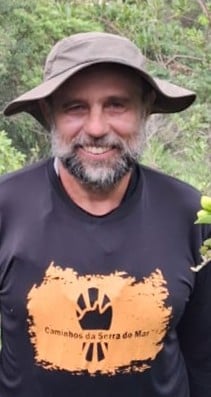
Pedro Cunha E Menezes
Director, Brazilian Trails Network
Pedro da Cunha e Menezes: is the founder of the Transcarioca Trail (https://trilhatranscarioca.com.br/) and Director of Rede Brasileira de Trilhas (Brazilian Trails Network). He was National Director for Protected Areas at the Brazilian Ministry for the Environment, Head of the Brazilian National Policy on Trails, Executive Director of Tijuca National Park, General Coordinator of Public Use and Business, and Director of Creation and Management at ICMBio (Brazil´s National Protected Areas Agency). Pedro was Brazil’s permanent representative to the United Nations Environment Programme, in Nairobi, Kenya, and Brazil’s official negotiator at the UN Conventions on Climate, Desertification, Migratory Species, Biological Diversity, World Heritage and Ramsar.
Pedro is currently President of the IUCN Expert Group on Long-Distance Trails and Director of the World Trails Network. In his three decades working in conservation, he has published more than 15 books and 150 articles on trails and protected areas in magazines and newspapers in Brazil and abroad. Pedro loves hiking, cycling, kayaking and horse riding. Pedro hikes over 1,500 km every year.
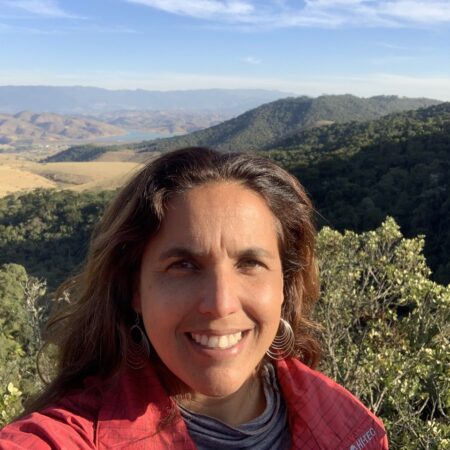
Paula Rascao
CEO, eTrilhas
Paula is a Tourismologist post-graduated in Tourism and Culture at the Federal University of Rio de Janeiro (UFRJ) and in Ecotourism and Environmental Interpretation at the Federal Rural University of Rio de Janeiro (UFRRJ). She has joined her experience acquired while working in several sectors of the tourism industry and her passion about Nature and outdoor activities in order to propose innovative projects that contribute to the development of Ecotourism in Brazil.
She is a founder and CEO at eTrilhas, which is a digital platform to promote and manage trails, parks and destinations. She has coordinated several projects focused on innovation and interactivity to promote trail systems and long distance trails in brazilian destinations. She represented Brazil in the Next Generation Trails Visionaires Expedition, in Japan.
Currently, she is a member of the Brazilian Trails Network board, and member of the Administrative Council of the Pan American Trails Network.
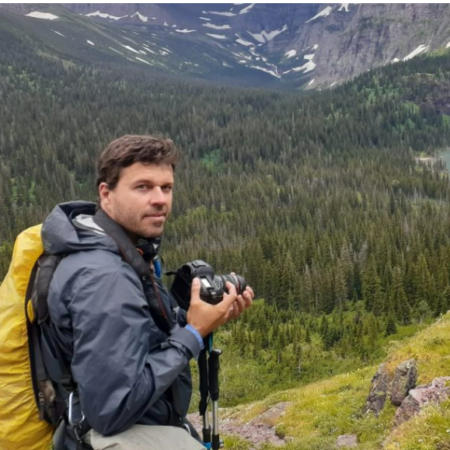
Ernesto Viveiros de Castro
National Park Manager, Chico Mendes Institute for Biodiversity Conservation
Ernesto Viveiros de Castro is a biologist and national park manager from Brazil. He got his PhD in Interdisciplinary Ecology at University of Florida in 2023 studying the US national scenic trails. He has been working in the Brazilian federal agency for protected areas (ICMBio) for 23 years and presently he is the superintendent of Serra dos Órgãos National Park, the third oldest NP in Brazil. In 2012, he founded the Atlantic Forest Trail, the first Brazilian mega trail. Ernesto is also a member of the World Commission on Protected Areas (WCPA-IUCN), the IUCN Tourism Specialists Group (TAPAS-IUCN), and the World Trails Network Trails & Conservation Task Team.
Cameroon
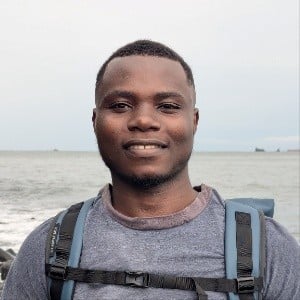
Ekuri Brian Akom
Program Coordinator, Green Cameroon
Ekuri is a World Trails Ambassador from Cameroon. He is passionate about promoting environmental education. He uses educational media such as art, film, and outdoor education programs to engage young people and get them to care about nature. He co-founded Earthlight Ambassadors to drive his vision of a world where young people are informed and empowered to protect our planet. He also works part-time as a program coordinator at Green Cameroon.
Canada
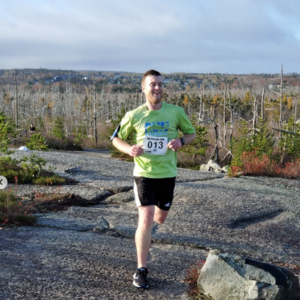
Brenden Blotnicky
Manager Network Development and Support, Trans Canada Trail
In his wide-ranging role as Manager, Network Development & Support, Brenden works closely with local trail groups on their applications to incorporate sections into the Trans Canada Trail network. He identifies opportunities to expand active transportation corridors through realignment and construction projects, while also managing budgets associated with active transportation, maintenance, and volunteer initiative programs.
A key part of Brenden’s work involves collaborating directly with municipal, provincial, and volunteer trail network partners to understand and support their needs. He helps strengthen trail management practices, build organizational capacity, and ensure long-term sustainability across diverse trail systems. His approach emphasizes partnership, aligning local priorities with broader network goals while respecting the unique context of each community.
Brenden also works with tourism industry stakeholders and trail partners to position trails as central assets for destination development. He supports efforts to showcase trails as anchors for tourism readiness, enhancing visitor experiences and contributing to local economic development through improved infrastructure, storytelling, and promotion.
A lifelong Nova Scotian, Brenden earned a science degree from Saint Mary’s University and a master’s degree in Resource and Environmental Management from Dalhousie University. He lives in Cole Harbour with his wife and daughter, along with Rupert (their cat) and Beasley (their springer spaniel). Brenden and Beasley are avid runners, often found on nearby trails at sunrise along the saltwater horizon.
Vera Cvetkovic
Blue Mountain Bruce Trail Club President, Bruce Trail Conservancy
Vera is a naturalized Canadian who was born and raised in Europe. She is a passionate technologist, traveler, and hiker. By day, she is a technology executive helping organizations with digital transformation and tech innovation. By night, she is a daughter, sister, wife, and mother of two young adults. She is active with the Bruce Trail Conservancy in multiple roles, including certified hike leader, trail captain, and Blue Mountain Hiking Club president.

Stacey Dakin
Chief Program Officer, Trans Canada Trail
Since joining Trans Canada Trail in August 2024 as Chief Program Officer, Stacey Dakin has been leading national initiatives that strengthen community connections, enhance trail experiences, and unlock the tourism potential of Canada’s iconic trail network. Drawing on more than two decades of experience in social innovation, entrepreneurship, and community development, Stacey brings a collaborative and systems-based approach to creating meaningful impact across the country.
Stacey holds a degree in Human Relations and a Master’s in Human Systems Intervention from Concordia University, and is a Certified Change Management Professional (CCMP). She is also the Past-President of Lean In Canada and the Founder of Changest, an organization that supports teams and leaders shaping positive change. Stacey is driven by connection—between people, places, and purpose—and is passionate about helping communities thrive through collaboration, accessibility, and sustainable tourism.
Stephen Harvey
Vice President – Board of Directors, The Great Divide Trail Association
Steve met his wife thru-hiking the PCT in 2016, and the two hiked the GDT as their honeymoon in 2021. Falling in love on the trail must be in his nature because he’s returned to do trail maintenance every year since.
He has been the chair of the GDTA’s IT committee since 2022, and was elected to the board in 2023, and is currently serving as Vice President. He hopes to see the Great Divide Trail become well known in the hearts and minds of all Canadians and protected as a source of national pride.
Jane McCulloch
Principal Consultant, Terminus Consulting
Jane McCulloch is the Co-Chair of the WTN Trail Tourism Task Team and has worked in the sector for over 20 years. She currently runs a boutique consulting firm in Canada specializing in community engagement, product development (tourism) and governance.
Jane has worked with trail organizations in eastern Canada to assess their trail (through the eyes of a tourism) and provide them with the tools they need to develop it as a destination trail. She enjoys providing people with practical tools that not only enhance the trail experience, but also to create more active and engaged community.

Michael McDonald
CEO, Bruce Trail Conservancy
Michael has been the CEO of the Bruce Trail Conservancy for 7 years, and has seen incredible growth within that timeframe. Michael works diligently to ensure the ongoing success of the Bruce Trail Conservancy.
A passionate leader who helps build solid relationships and strong teams. My strong organizational abilities and my dedication to solid management principles help me to lead the talented team at the Bruce Trail Conservancy. I am a natural communicator, and solid team builder. A lover of nature and enthusiast for the great outdoors.
Farhad Moghimehfar
Professor, Vancouver Island University
Dr. Farhad Moghimehfar is a professor of Tourism Management at Vancouver Island University, Canada, and the British Columbia Regional Innovation Chair in Tourism and Sustainable Rural Development. His research focuses on outdoor recreation and tourism in British Columbia, with an emphasis on rigorous research design and data-driven decision support for communities, destination organizations, and land and trail managers. He brings strong technical expertise to this work, including GIS, analytics, and applied data systems that support visitor monitoring, forecasting, and evidence-based destination management.

Erika Pardy
Executive Director, The Great Coastal Trail Authority
Erika Pardy is the Executive Director of the Great Coastal Trail Authority, leading the development of an ambitious 850+ kilometre coastal trail across Newfoundland and Labrador’s Great Northern Peninsula. Her work focuses on community-led trail development, regional economic growth, and building partnerships that position rural and coastal regions for long-term sustainability.
With extensive experience in economic development, tourism strategy, and community engagement, Erika has been instrumental in advancing a collaborative model that connects more than 60 communities along the proposed route. Her approach emphasizes trails as catalysts for job creation, local business development, and destination-building.
At the World Trails Conference, Erika will share how the Great Coastal Trail is being developed as a framework for community revitalization—demonstrating how partnership-driven trail initiatives can strengthen rural regions and create lasting economic and social impact.
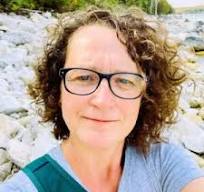
Jackie Randle
Vice President of Operations, Bruce Trail Conservancy
Jackie Randle is the International Chair and a founding member of the World Trails Network, with a trail career spanning decades. Based in Ontario, Canada, she has worked with the Bruce Trail Conservancy since 2002 and has been hiking since childhood, beginning on the walking paths of England.
A strategic and collaborative leader, Jackie has played an essential role in shaping the Bruce Trail Conservancy’s culture and expanding global trail connections. Her contributions to the World Trails Network include early involvement in its formation and leadership of the Friendship Trail program, building partnerships between the Bruce Trail and trails around the world.
Jackie continues to champion international cooperation, gratitude based leadership, and a lifelong love of exploring trails worldwide.
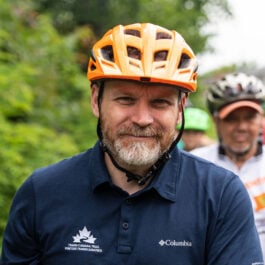
Mathieu Roy
CEO, Trans Canada Trail
Mathieu brings more than 20 years of experience and a strategic, innovative mindset to his role as Chief Executive Officer with Trans Canada Trail. Mathieu is a professional engineer with the Order of Engineers of Quebec. He co-founded and led his own environmental consulting firm, and brings a wide range of both leadership and hands-on experience to the organization.
Mathieu joined Trans Canada Trail in 2017 as Vice-President, Chief Trail Experience Officer. In this role, he led trail operation and development, as well as strategic alliances with a variety of stakeholders. Mathieu helped execute Trans Canada Trail’s $30-million funding relationship with Parks Canada and worked to deliver on the objectives of a $55-million agreement with the federal government.
Mathieu lives close to the La Montagnarde section of the Trans Canada Trail, which he explores on his bike in summer and on skis in winter.
China

Shulian Yu
Chief Engineer, Shenzhen Park Service
As the Chief Engineer of the Shenzhen Park Service, Shulian Yu has played a vital role in the completion of key plans such as the Shenzhen Mountain-Sea Connectivity Three-Year Implementation Plan and the Shenzhen Park City Construction Master Plan and Three-Year Action Plan. She promoted the integration of the 420-kilometer “Three Trails, Three Routes” hiking network, developed signature trails such as the Tanglang Mountain Mountain-Sea Corridor and the Dawoling Family Exploration Trail, and coordinated the implementation of park connectivity projects, including the Central Five Parks and Bao’an Eight Parks. Additionally, Shulian facilitated the development of supporting facilities and ecological conservation efforts in 12 natural country parks, comprehensively contributing to the realization of Shenzhen’s vision of a citywide park system and mountain-sea connectivity.
Denmark
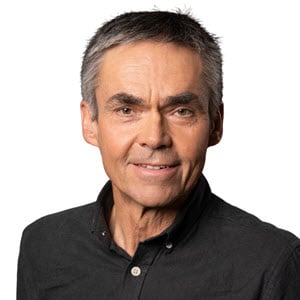
Jens Peter Hansen
Founder and Owner, Trailview
Jens Peter Hansen has a professional background spanning agricultural research, digital innovation, and advocacy within the renewable energy sector. Since 2021, his primary focus has been on getting more people into nature by making outdoor opportunities visible and accessible through digital tools.
As founder of TrailView, he has produced nearly 9,000 km of Google Street View “blue lines” across Denmark, Norway, Sweden, and Svalbard — captured by bicycle, on foot, on skis, and by kayak. His specialty is documenting routes the Google car never reaches: forest trails, coastal paths, gravel routes, island roads, and local nature gems that deserve to be seen, explored, and valued.
He serves as president of the Danish Cyclists’ Federation, is a board member of Danish Cycling Tourism, and is affiliated with a regional branch of the Danish Outdoor Council. From 2001 to 2025, he advocated for cycling, outdoor access, and rural development as a member of the Randers Municipal Council.
France
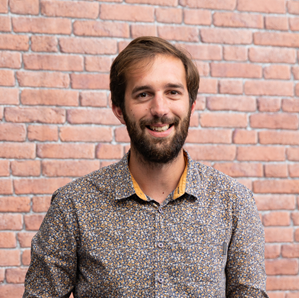
Raphaël Chapalain
Communications Officer, Eco-Counter
Raphaël Chapalain is a seasoned marketing and communication expert with over a decade of experience at Eco-Counter, a global leader in bicycle and pedestrian data collection and analysis solutions.
His expertise lies in bringing together data and stories to make compelling cases of how figures have enabled public administrations achieve meaningful changes locally.
Beyond his corporate role, Raphaël is passionate about advocating for sustainable mobility and collaborates with local authorities to promote cycling-friendly policies.
Greece
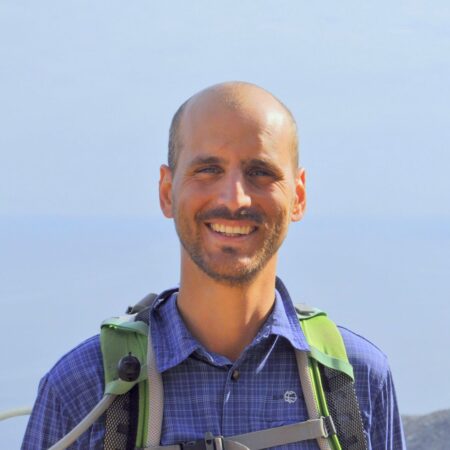
Fivos Tsaravopoulos
Manager, Paths of Greece Social Cooperative
Fivos Tsaravopoulos is a specialist in sustainable tourism and the revival of historic trail networks. As the founder of Paths of Greece, he has developed extensive hiking networks across the Mediterranean, using trails to support local communities and preserve cultural heritage. For the AlUla project presented here, Fivos worked as a key member of Wild Guanabana. He specializes in bridging the gap between modern trail design and deep historical analysis. His methodology combines archaeological scouting with marketing research to uncover ancient routes that satisfy both tourism objectives and strict environmental conservation mandates.
Fivos works with municipalities and organizations worldwide, advocating for “slow tourism” as a tool for economic growth and ecosystem protection. He believes that the most sustainable trails are those that reconnect us with the history of the land.
Hong Kong
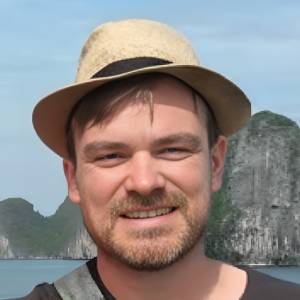
Stewart Ross
ThruhikingHK, Teacher – International College Hong Kong
Stewart Ross is a passionate advocate for trail design and outdoor exploration, currently residing in Hong Kong with his wife and two children. Originally hailing from Inverness in the north of Scotland, Stewart brings a global perspective to his work and hobbies.
Professionally, Stewart is a dedicated educator, serving as a Teacher and BTEC Coordinator at International College Hong Kong, and is the former Head of Design at Malvern College Hong Kong. His professional expertise is deeply rooted in design thinking, human-centred design, and sustainability, principles he actively applies to the world of trails. A recognized leader in the local hiking community, Stewart is the Founder and Curator of thruhikinghk.com, Hong Kong’s premier hiking website. He is perhaps best known for designing and developing the Argyle Ross Trail, a significant contribution to the local trail network that has garnered media attention in publications like the South China Morning Post and Bloomberg. Stewart is also a seasoned outdoor leader, holding the Gold Award for Young People (Duke of Edinburgh Leader).
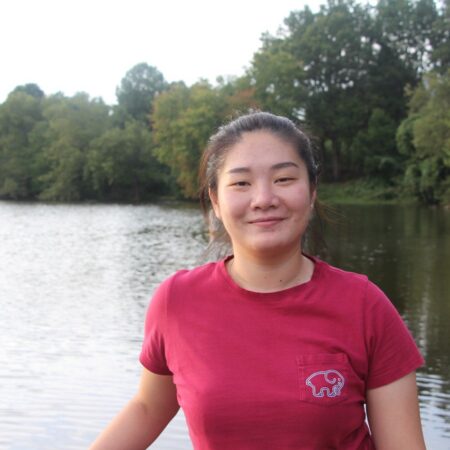
Suet Yi Cheung
Country Parks Officer, Agriculture, Fisheries and Conservation Department of Hong Kong SAR Government, China
Dr. Suet Yi Cheung currently works in the Agriculture, Fisheries and Conservation Department (AFCD) of the Hong Kong SAR Government as a Country Parks Officer, where she is responsible for trail management and trail volunteer programs in Hong Kong’s country parks.
She earned her PhD in Parks, Recreation, and Tourism Management from the Department of Parks, Recreation and Tourism Management at North Carolina State University (NCSU). Her research focuses on trail monitoring and assessment, recreation ecology, and human-induced land degradation from recreational activities. One of her recent publications is a 2025 paper in Environmental Management titled “Can Citizen Scientists Contribute to Trail Assessment and Monitoring Programs? An Empirical Evaluation of Data Congruence and Overall Efficacy”. This study evaluates a prototype citizen science-based trail assessment program in Hong Kong, examining the congruence between data collected by trained volunteers and professional managers, addressing concerns about data quality in protected area management.
This role aligns with her longstanding career aspiration to contribute to management of protected natural areas, advancing sustainable recreation practices while promoting environmental conservation.
Iceland
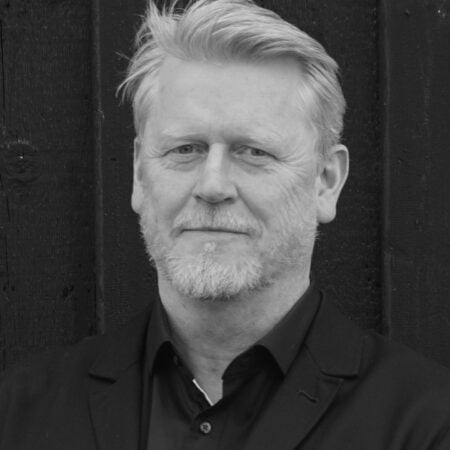
Birgir Jóhannsson
Architect, Hovering Trails
Master of Architecture from the Institut Supérieur d’Architecture de la Communauté Française – LA CAMBRE, 1993. Founder and manager of the design studio Alternance slf – Architecture & Urban Planning, established in 2000 (www.alternance.is). The studio was founded in Brussels and now also operates in Reykjavík.
My primary focus has been on planning and construction within dense urban areas, specializing in the renovation and transformation of old buildings with an emphasis on preservation and adaptive reuse. A core principle is the thoughtful addition to existing structures, aiming to harmonize old and new elements as seamlessly as possible. My portfolio ranges from urban planning and exhibition design to collaborations with contemporary artists and furniture design.
In 2023, I co-founded HoveringTrails ehf with engineer Laurent Ney (www.ney.partners). The company was created around an environmentally friendly product we designed to protect fragile natural sites from foot traffic while providing secure access for visitors. It is a ready-made system for creating high-quality, low-impact trails that adapt to the landscape. For this product and its implementation in Iceland, we have received the Belgian International Design Award 2024, a nomination for the Icelandic Product Design Award 2023, and the Icelandic Environmental Award 2022.
India
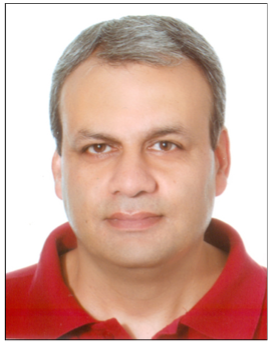
Lokesh Ohri
Chairperson, Humanities Himalaya
Author, Anthropologist, Conservationist, Dr. Lokesh Ohri has lived in Himalayas and walked to its remote corners. He has written over ten books and directed thirty documentaries on the region.
His books include Till Kingdom Come: Medieval Hinduism in the Modern Himalaya, Upper Ganga Region: Cultural Resource Mapping – Vols. I & II, On the Pilgrimage Trail to Kedarnath, Bridges of Uttarakhand, Walking with Laata, Samagrata: Living Heritage of the Ganga, and Samakshata: District-by-district documentation of the Ganga. His forthcoming title is Ambles Across Godland.
He has established South Asia’s largest walking community, Been There Doon That (BTDT). With over a million members, the community propagates slow, responsible and community based travel in the Himalayas, directly supporting fifteen village communities, generating employment at the grass roots. He has also established a policy research and documentation collective called Humanities Himalaya. He has been instrumental in the restoration and conservation of several heritage sites in Uttarakhand including Gartang Gali in Uttarkashi, George Everest Estate in Mussoorie, Mansingh-Ki-Chattri at Har-ki-Pairi, Haridwar, Malla Mahal in Almora, Pithoragarh Fort in Pithoragarh and Banasur Fort in Lohaghat. He is currently engaged in setting up Uttarakhand’s first arts’ village in Munsyari. He is also working to establish a chain of fifty village homestays in Ladakh.
A doctorate in Cultural Anthropology from the South Asia Institute, University of Heidelberg, Germany, he was also Marsilus Van Inghen Fellow at the Radboud University, Netherlands. He currently teaches courses at the Universities of Pittsburgh, USA, and Tübingen University, Germany.
He has been awarded the Mahatma Gandhi Prize and the Outlook Responsible Tourism Awards ‘23 and ‘25, for contributions to community based responsible trail walking. Conde Nast Travel Magazine has listed him among fifty people to know in the Himalayas.
Israel
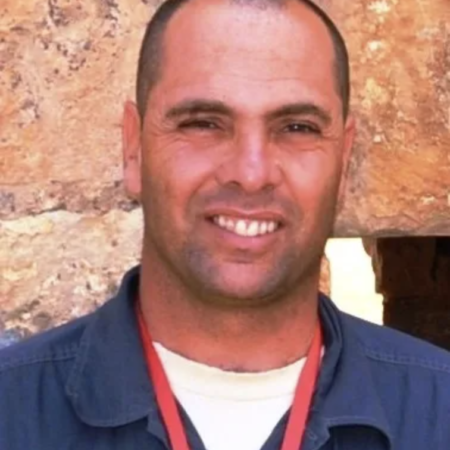
Emir Galilee
Associated Scholar, Ben-Gurion University
Dr. Emir Galilee is Director of the Human–Society–Environment Lab at the Azrieli Center for Israel Studies (MAALI), Ben-Gurion Research Institute for the Study of Israel and Zionism, Ben-Gurion University of the Negev. He is also a lecturer at the Kaye Academic College of Education in Beersheba. His research examines walking trails as cultural and political landscapes, alongside broader interests in the geography and history of Arab and Muslim societies, leisure geographies, and spatial practices of everyday life. His research interests include the social, cultural, and historical geography of minorities and former nomadic pastoralists in the Middle East.

Noa Ravinsky Raichel
PhD Candidate, Ben-Gurion University
Noa Ravinsky Raichel, Adv., is a doctoral researcher in Israel Studies. She completed her Master’s degree with distinction in the Woodman-Scheller Israel Studies Program at Ben-Gurion University of the Negev. She also holds a Master of Laws (LL.M) and is a qualified lawyer. Noa serves as the Managing Editor of Israel Studies (Indiana University Press). Her doctoral research focuses on National Trails, examining the interface between law and the sustainable preservation and development of these routes. Working title: “Balancing Rights and Sustainability: The Impact of Private Law on the Sustainable Preservation of National Trails.”
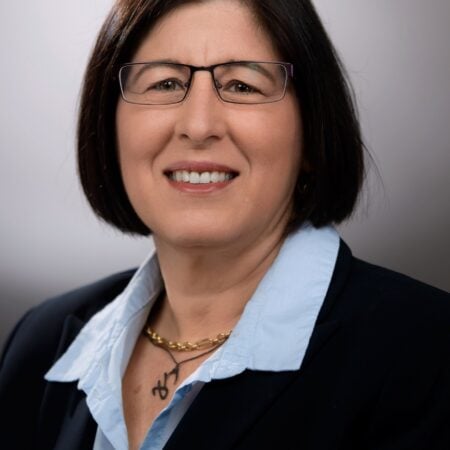
Havatzelet Yahel
Professor, Ben-Gurion University
Prof. Havatzelet Yahel is a faculty member at the Ben-Gurion Research Institute for the Study of Israel & Zionism, Ben-Gurion University of the Negev. Before she joined the academy, she served as the Deputy to the Southern District Attorney for Civil Matters and the Head of Land Department. Yahel received her PhD from the Hebrew University of Jerusalem. She completed her MPA at the Harvard Kennedy School of Government after receiving the Israel Wexner Fellowship for excellence in the public sector. She holds a BA in Economy and an LLB in Law from Tel-Aviv University. Her research interests include land policy and land rights, indigenous and minority rights, leisure patterns, the Bedouin population, historical geography and more.
Japan
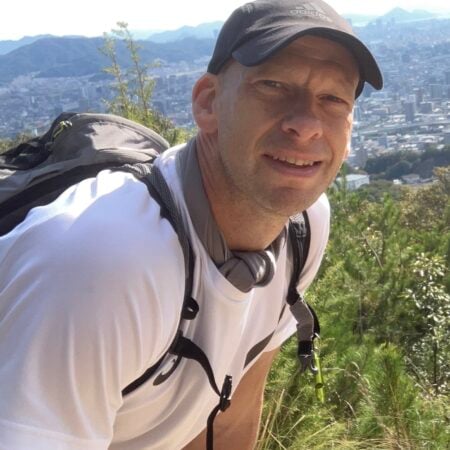
Keith Barrs
Professor, Hiroshima Shudo University
Keith Barrs works in the Department of English at Hiroshima Shudo University, Japan. His main academic interest is in the field of Linguistic Landscape research, particularly in the study of signage along hiking trails, examining issues of multilingualism, and sign design and placement. Interlinking with this research interest, his main free time activity is exploring Japanese trails, or more precisely, getting lost on the trails and wishing he had spent more time studying the Japanese language so that he could work out how to get off the mountain.
Lebanon
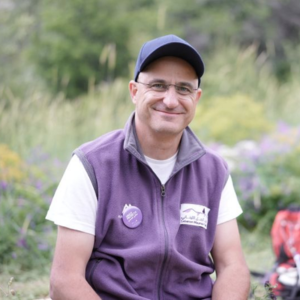
Omar Sakr
Executive Director, Lebanon Mountain Trail Association
Omar is currently the Executive Director of the Lebanon Mountain Trail Association (LMTA) and a board member since 2017 where he served as head of the Community Development committee, Secretary and Treasurer. Omar is a true scout at heart, a CSR, HR and rural tourism development practitioner. He has launched and managed several CSR programs and implemented ISO 26000 standard for corporate social responsibility in different companies in Lebanon and East Africa. Omar is also a Responsible Business, Hospitality & Tourism senior lecturer and a founding and active member of the Sustainability Task Force Team at Notre Dame University Lebanon. His area or research is mostly focused on Responsible Hospitality and Tourism.
He serves on different boards and holds a BA in International Affairs from the Lebanese American University (LAU), an MBA from Notre Dame University (NDU), an MSc in Responsible Tourism Management form Leeds Becket University (UK) and is actually working on his PhD thesis in Tourism at UIB Spain.
New Zealand

Sarah Bennett
Director, Bennett & Slater
Sarah Bennett is one of New Zealand’s leading travel writers and visitor communications strategists. Starting her tourism career in the London office of Lonely Planet travel guides in 1995, she returned to New Zealand in 2000 and has spent the last 25 years writing specifically about her home country.
As well as writing extensively for mainstream media outlets, Sarah has more than a dozen books to her credit including Lonely Planet New Zealand (five editions), Lonely Planet’s Hiking & Tramping New Zealand, The New Zealand Tramper’s Handbook (two editions), Let’s Go Camping and her bestselling, independent guidebook to the capital city, The Best of Wellington (six editions).
Along with her partner Lee Slater, Sarah has provided content and tourism marketing services to most major New Zealand tourism organisations including the Department of Conservation, Tourism New Zealand, Holiday Parks NZ and Heritage NZ as well as many regional tourism offices and local operators. Sarah has also been involved in the Great Rides of New Zealand since their inception and until recently served on the New Zealand Cycle Trails Board.
For the last three decades, Sarah has maintained a secondary career as a book editor and publisher, and latterly publicist for New Zealand non-fiction publisher, Bridget Williams Books. This ongoing role sees her work with many leading authors across economics, politics, history, the environment and Te Ao Māori/the Māori World. Sarah also enjoys an association with Aukaha ki Kāi Tahu, the cultural agency of southern rūnaka/tribal councils of Ngāi Tahu.
Sarah Bennett and Lee Slater share a passion for truly regenerative tourism and believe community-led trails are uniquely positioned to drive the change urgently needed for a healthier planet.
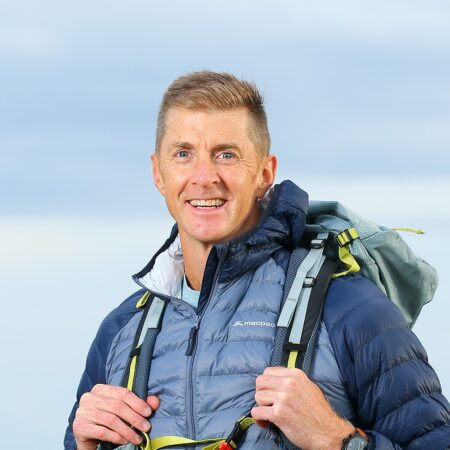
Matthew Claridge
Chief Executive, Te Araroa Trust
Matt Claridge is the Chief Executive of Te Araroa Trust, the kaitiaki of New Zealand’s national walking trail – a continuous 3,039 km journey from Cape Reinga to Bluff. With a background in national-level sport, public safety and systems leadership, he supports the Trust to think intergenerationally – holding space for environmental renewal, cultural connection, and strong communities.
Throughout his career, Matt has worked in the service of movements that improve wellbeing, whether through community sport, public health, or water safety. His experience spans executive and governance roles across the not-for-profit and NGO sectors, with a focus on partnerships, values-based leadership and long-term strategy. He has contributed to national organisations including Water Safety New Zealand, The Tomorrow Project and Nuku Ora (formerly Sport Wellington), and has coached at international level in water polo.
At Te Araroa, Matt supports the work of a small team and board committed to regenerative trail practice. Under the lens of Whakahou, the Trust is focused on restoring the trail’s ecological footprint, building respectful relationships with iwi and landholders, and creating long-term benefit for communities connected to the trail. Much of the Trust’s infrastructure development occurs on land it does not own, requiring sustained dialogue, trust, and co-created solutions, particularly with mana whenua, farmers, the Department of Conservation, and regional partners. Rather than owning the trail outright, Te Araroa Trust is a steward, walking with others, rather than ahead. Matt’s role is to support that journey: aligning vision, enabling partnerships, and developing the operational requirements needed to turn aspirations into reality.
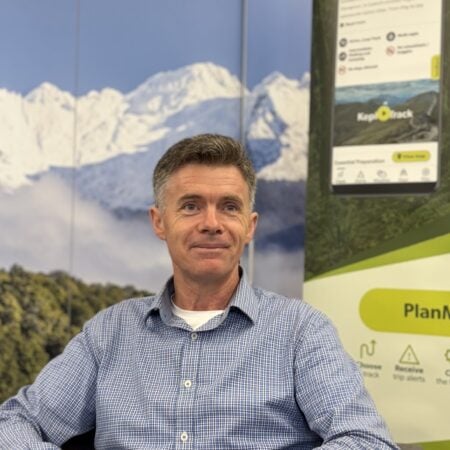
Mike Daisley
Chief Executive Officer, NZ Mountain Safety Council
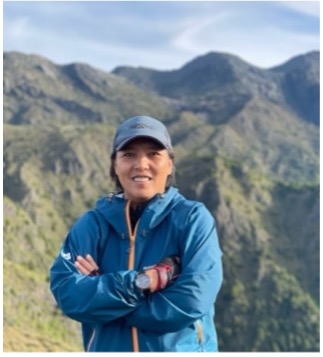
Panay Kumod
PhD Student Indigenous Studies, Victoria University of Wellington
Panay Kumod (she/her; Amis & Bunun/Taiwanese), is a PhD Student at University of Victoria, Wellington, New Zealand, focusing on Māori culture tourism, cultural development and education. Her professional background includes serving as the Principal Investigator of the Bunun Hunting Culture Recording Project and as Program Manager for Austronesian community development.
In her community, Kumod leads initiatives that combine digital technology, eco-tourism, and Indigenous cultural storytelling—offering hiking and e-biking tours that connect visitors with Bunun heritage. Through both academic research and hands-on community work, Kumod strives to bridge Indigenous knowledge systems across Taiwan and Aotearoa. Her vision is to return to Taiwan to share Māori insights, strengthen Indigenous resilience, and build sustainable cross-cultural collaborations for the future. She lives between Aotearoa and Taiwan.

John Lieswyn
Principal Transportation Planner, ViaStrada
John is a former US national road cycling champion who has focused on the planning and design of streets for all transport modes, ages, and abilities since 2005, when he started with Palmerston North City Council as a transportation planner. After completing his Master of Engineering (Transport), he worked for three years on major projects in the USA including the US$100M CV Link pathway and ways to provide for non-motorised users at several highway interchanges in and around Silicon Valley. He works with schools and communities to provide healthy and safe ways to get around our communities. John prepares master plans, business cases, and undertakes a variety of transportation research. He has extensive experience in automatic data collection, demand estimation, and level of traffic stress modelling. He is the former chair of the Engineering NZ Transportation Group.
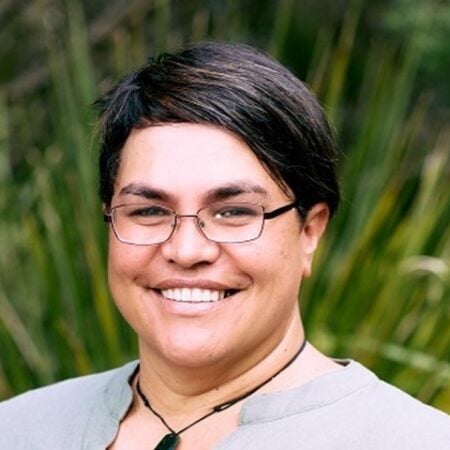
Kylie Ruwhiu-Karawana
Managing Director, TRC Tourism
Kylie Ruwhiu-Karawana is the Managing Director of TRC Tourism and an Indigenous Māori woman of Ngāpuhi descent, based in Aotearoa New Zealand. She works alongside communities, Traditional Owners, councils and governments across Australia, Aotearoa and the Pacific to support values-led, culturally grounded and environmentally responsible tourism development.
With over 20 years’ experience in destination planning, experience design and community engagement, Kylie specialises in First Nations-led tourism, nature-based experiences and long-term place stewardship. Her work spans strategic planning, experience development and facilitation, with a strong focus on aligning tourism with community aspirations and intergenerational outcomes. Her approach positions tourism as an enabler of cultural, social, environmental and economic wellbeing—rather than a driver imposed on place.
Kylie speaks internationally on purposeful engagement with local and Indigenous communities, supporting agencies, governments and corporations to build enduring, values-based partnerships grounded in trust, reciprocity and shared outcomes. She also works alongside Indigenous communities on truth-telling journeys, supporting the articulation of cultural narratives, identity and place, and helping to unlock the potential of tourism and trails as vehicles for cultural revitalisation, environmental stewardship, social connection and economic opportunity.
She is the Global Lead for Indigenous Ways within the World Trails Network, where she champions the integration of Indigenous knowledge systems, cultural authority and community leadership across global trails initiatives.
Republic of Korea
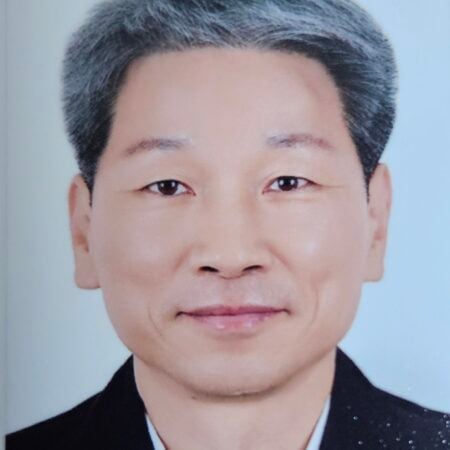
Yunyoung Hwang
Director, Yangsan Urban Culture Research Institute
Born in Yangsan, Republic of Korea, in the 1960s Yunyoung was raised in a family deeply engaged in community service. Witnessing his parents’ voluntary leadership and personal sacrifice for local infrastructure and collective well-being shaped his enduring commitment to community-centered leadership, cooperation, and social harmony.
Yunyoung has Doctor of Philosophy (Ph.D.) in Business Administration and Marketing from Changwon National University, Republic of Korea, his dissertation was on “The Effects of Perceived Value of Ecotourism on Tourism Experience, Actual Ecotourism Behavior and Customer Loyalty”.
In 2012 Yunyoung founded the Cheonseongsan Forest Trail Preservation Association (predecessor of the Yangsan Urban Culture Institute), dedicated to conserving Cheonseongsan, a symbolic site of the earliest sunrise over the East Sea in Eurasia. He was the organizer of the 1st, 2nd, and 3rd Cheonseongsan Ecological Forest Trail National Walking Festival and the 4th Cheonseongsan Ecological Forest Trail Eurasia Walking Festival in the Republic of Korea. His is the Director of The Yangsan Urban Culture Research Institute (YUCI), a non-profit dedicated to sustainable urban culture through walking, ecology, and cultural engagement in South Korea.
South Africa
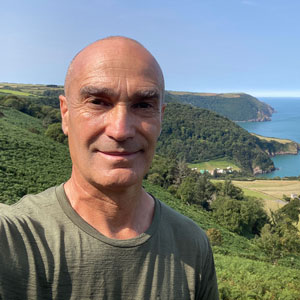
Galeo Saintz
Founder CEO, Trails + Wanderlust | Biosphere Trails | Trail Standards Initiative
Galeo Saintz is an international trail and conservation specialist who consults on trail standards, design, and conceptual development, while his conservation work focuses on biodiversity corridors and connectivity, with an emphasis on the intersection of trails, ecosystems, and communities. He currently chairs both the World Trails Network Task Team on Trails & Conservation and the IUCN CEESP Task Force on Migration, Environmental Change, and Conflict.
Galeo is Founder and CEO of Trails + Wanderlust – a private trail concession company and international consultancy in trail development and tourism. CEO of Biosphere Trails – a global platform focused on enhancing the sustainability and marketing reach of trails in UNESCO Biosphere Reserves. Since 2026 he is Founder of the International Trails Standards Initiative – a world-wide initiative to align trail standards.
A founding figure in several global initiatives, Galeo served for a decade as the Founding Chair of the World Trails Network, uniting leading trails and trail destinations worldwide. He has led numerous conservation and trail-related projects in his home country of South Africa and internationally, combining strategic leadership with on-the-ground experience. Galeo is also a wilderness mountain guide and nature poet. His creative work has been featured in anthologies, documentaries, and festivals that celebrate nature connection. In addition to his advisory roles, Galeo serves as Chair of the Schumacher Society UK, and sits on the boards of several African conservation and trail-focused NGOs. His work bridges conservation, culture, and systems change across multiple continents.
Taiwan
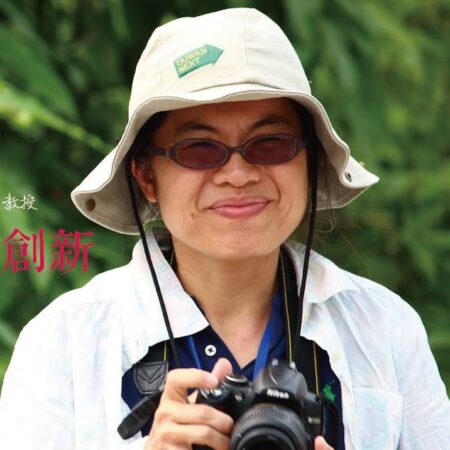
Hsiu-Tzu Chang
Associate Professor, National Cheng Kung University
Hsiu-Tzu (Betty) Chang is an Associate Professor in the Department of Urban Planning at National Cheng Kung University (NCKU), Taiwan. She also serves as Director of the Social Practice Division at NCKU’s Research Center for Humanities and Social Sciences, where she coordinates university-wide initiatives related to community engagement, place-based learning, and University Social Responsibility (USR).
Professor Chang’s research explores collaborative planning, asset-based community development, and governance, particularly in rural, peri-urban, and culturally significant landscapes. She has conducted empirical research on long-distance trails, cultural routes, rural regeneration, and territorial governance in Taiwan, examining how grassroots organizations, civil society actors, and public institutions interact across scales. Her recent work pays particular attention to the role of intermediary organizations, such as trail workstations, community platforms, and university-based engagement units, in mediating between formal policy frameworks and localized practices.
She is the Principal Investigator of Collaborative Badlands, a flagship USR project supported by Taiwan’s Ministry of Education. The project spans multiple rural communities in southern Taiwan and integrates teaching, research, and social practice to address issues of landscape degradation, cultural heritage, and regional revitalization. Through this long-term engagement, Professor Chang has developed participatory methods that combine field-based learning, co-production of knowledge, and reflective evaluation, contributing to ongoing debates on engaged scholarship and learning regions.
Chenyin Chiang
Professor, National Central University
Chen-Yin Chiang is an Associate Professor at the General Education Center, National Central University, Taiwan. As a sociologist, her extensive research spans the fields of ethnicity and migration, gender studies, and the sociology of space. Her academic work critically examines how historical memory and complex power relations are negotiated and reproduced within contemporary governance practices. In recent years, she has extended her expertise to the socio-cultural study of long-distance trails, viewing them as vital spaces for social dialogue and historical reconstruction.
Her current research on the Raknus Selu Trail—Taiwan’s first national trail centered on ethnic history—explores how former conflict frontiers between Indigenous peoples and Hakka settlers are being transformed into contemporary “landscapes of reconciliation”. Through community-led stewardship and the decolonization of historical narratives, her work seeks to understand the role of trails in fostering inter-ethnic solidarity and sustainable community engagement. She has been actively involved in exploring the collaborative governance models that bridge civil society organizations and public agencies in the management of cultural heritage trails.
Ming-sho Ho
Professor, Department of Sociology, National Taiwan University
Ming-sho Ho is a professor in the Department of Sociology, National Taiwan University. He studies social movements, labor and environmental issues. He is also the principal investigator of the “Toward a Taiwan’s Hiking-and-Trailology” research project. He is the author of Working Class Formation in Taiwan: Fractured Solidarity in State-Owned Enterprises (2014), Challenging Beijing’s Mandate of Heaven: Taiwan’s Sunflower Movement and Hong Kong’s Umbrella Movement (2019), and Be Water: Collective Improvisation in Hong Kong’s Anti-Extradition Protests (2025).
Ming Chien Hsu
Research Fellow (PhD) Department of Sociology, National Taiwan University
Deputy Chief Executive Officer at Taiwan Thousand Miles Trail Association (TMI Trail). Originally, Hsu simply enjoyed hiking until she discovered the ecological damage caused by the full-scale importation of granite into the mountains surrounding Taipei in 2002, which compelled Hsu to take action to care for and protect Taiwan’s mountain trails and natural environment to this day. Hsu is actively involved in promoting trail volunteering, trailology course curriculum development and trail master training systems. To date, along with TMI Trail and various public agencies, Hsu has been involved in hands-on work of over 180 eco-craft trail projects.
Sai Ng
Professor, Chinese Culture University
Sai-Leung Ng is a professor at the Department of Geography, Chinese Culture University, Taiwan. His teaching and research interests include sustainable tourism, pro-environmental behavior, visitor impacts, trail degradation and conservation, management of protected areas, nature conservation, environmental change, and environmental studies. His academic work emphasizes the analysis of interactions between humans and the environment in recreational and tourism settings, with particular attention to how patterns of use and management practices shape environmental outcomes. In the research field of hiking trails, he integrates perspectives from geography and environmental studies and focuses on assessing visitor impacts, trail conditions, and conservation strategies, with the goal of promoting sustainable trail use and the long-term protection of natural landscapes.

Dana Powell
Associate Professor, Taipei Medical University
Dana E. Powell (she/her; US citizen) is Associate Professor of Anthropology in the Graduate Institute of Medical Humanities at Taipei Medical University, Taiwan, where she also directs the Center for Humanities Innovation and Social Engagement. She has worked for 20 years alongside rural, predominantly Indigenous communities on issues of self-determination, energy infrastructure and environmental justice. Powell is author of Landscapes of Power: Politics of Energy in the Navajo Nation (Duke Press, 2018); co-author of The New Invitation to Anthropology (Bloomsbury, 2023); and has published in journals such as Native American Indigenous Studies (NAIS); Environment & Society; Journal of Political Ecology; Engaging Science, Technology, and Society; Collaborative Anthropologies; and in numerous edited volumes. She lives with her spouse and three children in Hualien City, Taiwan.
Jacky Tao
Head of International Relations, Taiwan Thousand Miles Trail Association
Aside from his work at TMI Trail, Jacky also serves as the Executive Secretary at Asia Trails Network Secretariat (ATN). He was in a foreign literature master’s program, but decided to quit school and work in NGO searching for his lacking activism. Jacky hopes to live in a degrowth society filled with trails maintained with eco-friendly methods.
Chia-Ling Wu
Professor Department of Sociology, National Taiwan University
Chia-Ling Wu is Chair and Professor of Sociology at National Taiwan University. Her research specializes in science, technology, and society (STS), medical sociology, and gender studies. In February 2023, she published Making Multiple Babies: Anticipatory Regimes of Assisted Reproduction with Berghahn Books, which received two book awards. Her recent publications and research projects address a wide range of topics, including midwifery, horticultural therapy, and trail building as care practices; the global–local politics of multiple embryo transfer; public financing of IVF in Japan, South Korea, and Taiwan; and the social exclusion of single women and gender minorities in assisted reproductive technology regulations. She has served as editor-in-chief of East Asian Science, Technology and Society (EASTS), Journal of Women’s and Gender Studies, and Taiwanese Sociology. She is also a co-founder of the Birth Reform Alliance in Taiwan, an NGO dedicated to improving reproductive care.
Turkiye
Kate Clow
Chair person and founder of Lycian way, Culture Routes Society
Kate Clow first came to Turkey in 1989 to sell computer systems. In 1992 she moved to Antalya and, out of sheer interest, began researching the ancient roads that connected the cities of Greek and Roman times. In 1995 she linked a series of hiking trails and developed them into Turkey’s first long-distance hiking trail. The interest of many international hikers quickly made this long-distance trail along historically significant places known. Shortly thereafter, in 1999, “The Lycian Way” was officially opened. Just a few years later, in 2004, the St. Paul’s Trail was opened. Guide books with hiking maps were published by Kate Clow for both long-distance hiking trails. In 2008 another hiking guide for the Kaçkar Mountains in NE Turkey was published. Kate still leads trekking tours today and finds the Lycian Way surprisingly unspoilt and varied, despite the fact that it is now heavily frequented. She is an avid user of maps and contributor to Open Street Map and other digital formats – one of her main aims is to bridge the gap between less-educated villagers who provide services to trekkers, and their visitors. Her other main aim is cultural and archaeological preservation. She is a collaborator and participator in the project DETOUR.
Dr. Servet Karaca
Academic, Mersin University
Dr. Servet Karaca was born in 1985 in the city of Mardin, Turkey. He graduated with honors from the Department of City and Regional Planning at Karadeniz Technical University, Faculty of Architecture, in 2009. In 2012, he began working as a research assistant in the Department of City and Regional Planning at Mersin University, where he completed his master’s degree in 2013 and his doctorate in 2023. Additionally, from June 2018 to June 2019, he conducted research on “National Parks” as a visiting researcher at the Social and Economic Sciences Research Center at Washington State University in the United States.
Dr. Karaca specializes in topics such as the planning and management of national parks, outdoor recreation activities, land ethics, and the planning of long-distance hiking trails. In these fields, he plays an active role in various projects aimed at creating, maintaining, and preserving hiking routes in collaboration with local communities. As a member of organizations focused on the Lycian and Cilician trails, which are long-distance hiking routes in Turkey, he is particularly engaged in the planning and design processes of the Cilician Trail.
Within the framework of his work, he aims to create long-distance cultural routes and day-hiking trails by connecting ancient roads and paths in rural areas, while also striving to develop best practices for preserving existing cultural routes in Turkey and fostering new route formations. He continues to conduct scientific research on the functionality of the routes created, the challenges faced, and sustainability issues during the planning and design processes. Moreover, he is seeking solutions to address legal and administrative gaps regarding cultural pathways.
At the World Trails Conference 2026, he aims to present a paper on the current status and sustainability of hiking routes in Turkey, with the goal of informing stakeholders and raising awareness on this matter.
United Kingdom

Lora Aziz
Creative Director, Wyrd Flora
Lora Aziz is an artist, producer, and founder of Blue steps, a practice and platform exploring the relationships between water, landscape, culture, and justice. Her work sits at the intersection of arts, ecology, public space, and wellbeing, with a particular focus on how communities experience and access blue and green environments in everyday life.
Lora leads place-based, interdisciplinary projects that combine walking, mapping, ecological fieldwork, participatory research, and artistic commissioning to reconnect people with freshwater systems from chalk streams and rivers to urban waterways and tidal edges. She is currently leading Blue Steps Along the Saffron Trail, a large-scale feasibility study reimagining a historic 70-mile route from Saffron Walden to Southend-on-Sea as a shared cultural and ecological asset connecting communities, land, and water.
Her work often engages with themes of climate and water justice, inequity in access to nature, and the cultural histories embedded in landscapes. She collaborates closely with artists, environmental practitioners, local authorities, health and wellbeing partners, and community groups to develop projects that are both creatively ambitious and grounded in real-world policy and place-based contexts. Lora’s approach is arts-led but systems-aware: she is interested in how cultural practice can contribute to long-term environmental recovery, inclusive public infrastructure, and new models of stewardship. She has worked internationally on projects linking creativity with environmental resilience, public health, and community-led change, and is particularly committed to slow, relational ways of working that centre lived experience and local knowledge.
Julian Gray
Director, South West Coast Path
Julian is an environmental leader with over 35 years’ experience in access, sustainable tourism and protected landscapes. He has been actively involved with the World Trail Network since 2018 and became an International Board Member and Vice-Chair in 2020. Julian was elected Co-Chair of the WTN in 2024.
Julian is Director of the South West Coast Path Association, championing England’s longest National Trail. He created the Coastal Wildbelt concept to help connect people with nature. He helped establish and was founding Chair of National Trails UK, the charity giving a voice for trails across the UK and remains a Trustee of the charity.
Previously Julian was CEO of an international rainforest charity and set up an international water conservation programme and worked across Europe to develop tools to help brand protected landscapes. Julian is an Environmental Scientist with a Masters degree in International Communication. He is a member of Natural England’s Landscape Advisory Panel and the International Union for Conservation of Nature (IUCN). He is a highly effective environmental communicator and a passionate advocate of trails as drivers of sustainability and improving equity of access, to connect people to nature.
Ozlem Hammond
Founder and Director, Oncommittment
Ozlem Hammond is a UK–Turkey based visual artist whose practice explores the intersection of landscape and cultural heritage. Working primarily through painting and walking, her work responds to threatened environments and the stories embedded within them.
She is the founder of Project PATH – Protecting Trails & Heritage, an interdisciplinary initiative that brings together art, storytelling, and community engagement to raise awareness of vulnerable cultural routes. Through artist residencies, plein-air practice, and collaborative projects, she aims to reconnect people with landscapes while advocating for their long-term protection.
Her work is particularly rooted in the landscapes of the Lycian coast, where she combines creative research with local narratives to create a dialogue around heritage, identity, and conservation.
Kate Jury
Coastal Wildbelt Programme Manager, National Trails UK
At National Trails UK, Kate heads up the Coastal Wildbelt Programme. The national initiative proudly championing both nature and the people who share our dynamic coastline, pushing for a truly joined-up, impact-led approach where thriving habitats and thriving lives carry equal weight. Enthusiastic, inspiring and passionate project manager and communicator, Kate brings extensive experience of strategic project development, behaviour change delivery and community engagement to her work. With her adaptable communication style and dynamic, flexible approach to work, Kate has shaped successful environmental projects across the globe- spanning Europe, South America and Asia. With global experience ranging from climate smart agriculture, ecosystems services, water sanitation and global public health, through to youth engagement, active travel, public access and nature recovery at scale across the UK – Kate’s work always focusses on the connections between people, nature and place. Passionate about the benefits of nature-based activities, she’s usually found outside of work foraging, getting lost whilst cycling, rambling in the hills or jumping in (often very cold) bodies of water.
Aletha Mays
Head of Communications, South West Coast Path Association
As Head of Communications for the South West Coast Path Association charity, I work with the team to communicate our vision and mission and champion the South West Coast Path as one of the UK’s most treasured National Trails. A key focus is to work with partners and supporters to ensure that the Path is protected for future generations and promote it for everyone to enjoy.
Born in Australia, I moved to Cornwall as a teenager, where I spent many happy days with my family on country rambles exploring the wild west coast. Following university, I returned to Australia and worked in museums and galleries in Sydney and across regional New South Wales before eventually finding my way back to Cornwall.
I love culture and heritage and the great outdoors. For me, the South West Coast Path combines these three in a dramatic landscape that is a privilege and pleasure to walk daily.
Ali Pretty
Artistic Director, Kinetika
Ali Pretty is a cultural activist and internationally recognised artist who uses walking, talking, and collaborative making as radical tools for connection and change. Her work transforms public environments into a shared platform where communities can address challenging issues such as climate action, peace, reconciliation, and inclusivity. Through artist-led walks, she mobilises people, landscapes, and stories into living artworks that spark dialogue, celebrate identity, and inspire action. These journeys are shared on an international stage, connecting local experiences to global conversations.
Ali is building on three decades of leading Kinetika. (1997 – 2027) She has collaborated on numerous large-scale events for diverse audiences worldwide, WOMAD (1989-1992), Atlanta Olympics (1996), Athens Torch Relay – London (2004), Beijing Cultural Olympiad (2008), FIFA World Cup Abu Dhabi (2009), London 2012 Olympic and Paralympic Games, The Queen’s Platinum Jubilee Pageant (2022), Cultural Olympiad Paris Olympics (2024).
Since 2012, Ali has developed transformative walking arts projects. Her innovative approach combines walking, talking, and creative making to foster connection and bring people together. She has led impactful walks across Wiltshire, the Isle of Wight, Lincolnshire, Essex, and Thurrock. In Thurrock, Ali established T100, a dynamic year-round programme of walking, talking and making activities. This innovative place-making model has been successfully replicated in India, Ethiopia, Chile, Costa Rica and Lebanon. She served as the Artistic Director of Silk River, a project commissioned by the British Council as part of the UK/India Year of Culture in 2017. Ali was the Artistic Director of Beach of Dreams, a UK-wide coastal arts festival supported by Arts Council England and Historic England. This year-long creative programme (2024- 5) explored and activated the unique heritage, cultures, communities and climate futures of the UK’s coast.
USA
Niles Barnes
Deputy Director, East Coast Greenway Alliance
A champion for sustainability and developing walkable and bikeable communities, Niles Barnes joined the East Coast Greenway Alliance in 2013 and serves as deputy director.
Based in Durham, N.C., Niles provides internal and external strategy for the Alliance. Working across departments, he implements strategies for Greenway advocacy and public policy initiatives and contributes to organizational operations, program delivery, finance and technology.
Niles graduated Phi Beta Kappa from the University of Kentucky and received his master’s degree in environmental management from Duke University.
He is a Leadership in Energy and Environmental Design Accredited Professional (LEED AP) and holds a certificate in business administration from the University of Kentucky’s Gatton College of Business and Economics.
Louise Bordelon
Assistant Professor, University of Colorado Denver
Louise Bordelon was educated in landscape architecture, architecture, geography, and anthropology in both South Africa and the United States (where she was a Fulbright Scholar). Prior to joining CU Denver in 2019, Louise taught landscape architecture at Louisiana State University and worked in practice in South Africa and the United States and also held a postdoctoral fellowship in Geography at Stellenbosch University in South Africa.
Her research, teaching, and practice explore ideas around cultural landscapes, landscape interpretation, tourist photographs and their impact on tourist behavior, and the narratives and identities that we construct to create a tourist landscape. Louise is drawn to places of cultural and landscape change and is focused on exploring the ‘neglected narratives’ of landscape interpretation including erased ecologies, cultures, races, and individuals. Her varied and diverse education, and background as a woman from Africa, allow her to work through a truly interdisciplinary and inter-cultural approach to research and different research methodologies. Louise also publishes on topics around trails and mountain biking, specifically barriers to women’s participation in mountain biking and other sports associated with risk and fear. She practices Disturbia through rewilding the suburban landscape and displays a keen interest in urban ecology, biodiversity, pollinator pathways, and the invention of nature.
Delia Clark
Principal, Confluence
Delia Clark is Principal at Confluence, based in Vermont USA, and is a frequent trainer and facilitator in place-based education, heritage interpretation, and community engagement throughout the United States and Central/Eastern Europe, for organizations that include US National Park Service, US Forest Service, Appalachian Trail Conservancy, Iditarod Historic Trail Alliance, and QLF/Atlantic Center for the Environment.
An avid hiker in the US and internationally, Delia’s wealth of trails management experience includes serving as board member for Appalachian Mountain Club, Stewardship Council member for Appalachian Trail Conservancy, co-chair of ATC’s Wild East Women, co-chair of the World Trails Network Advisory Council and the WTN Education & Inclusive Engagement Task Team, and board member for the Green Mountain Club. She has been a lead trainer for the Appalachian Trail to Every Classroom, Iditarod Trail to Every Classroom, Park for Every Classroom and Forest for Every Classroom programs. Delia is the co-author of Questing: A Guide to Creating Community Treasure Hunts published by University Press of New England; Learning to Make Choices for the Future: Connecting Public Lands, Schools and Communities Through Place-based Learning and Civic Engagement; Building Skills for Effective Facilitation; and other manuals and chapters; which have collectively been translated into seven languages.
She is a member of the IUCN (International Union for the Conservation of Nature) Commission on Education and Communication.
Pitt Grewe
Head of Social and Environmental Impact, AllTrails
Pitt has been working in the outdoor industry for 20 years. From resort operations to public service, he has always focused on helping people get outside and find a connection with our public lands. In this role, he drives the strategy behind AllTrails’ mission to help protect trails, protect the planet, and ensure safety for everyone outdoors. Before joining AllTrails, Pitt served as the Director of the Division of Outdoor Recreation in the state of Utah. He loves working with the many outdoor recreation stakeholders to increase funding, harbor collaboration and educate communities on the benefits of getting outside. He is always up for an adventure on a trail, a river, a cliff face, or in the snow.

Kate Harbour
Deputy Director, Eastern Oregon Visitors Association
Originally from a small town on Whidbey Island, WA, Kate has a passion for place and livability, and is inspired by working with communities to plan and pursue inclusive futures. With a background in nonprofit fundraising, capacity-building and collaborative processes, Kate currently serves as the Deputy Director of the Eastern Oregon Visitors Association, a regional tourism organization. In this role she works with communities and organizations to support both emerging and mature destinations in a vast, rural region. She helps develop outdoor recreation and tourism that brings local benefit, and seeks collaborative solutions for preventing negative impacts on community livability and natural areas.
Kate studied urban and regional planning at Portland State University, with an emphasis on the planning dynamics of gateway and natural-amenity regions.
Whitney Henry-Lester
Producer, Editor, Experience Designer, Earheart Lab / The Darling Killer
Whitney Henry-Lester builds participatory experiences at the intersection of storytelling, place, and connection. A documentary editor/producer and narrative strategist, she has spent 15+ years working with organizations like StoryCorps, 99% Invisible, and PRX to architect frameworks that help people find and share their stories. Working across the U.S., Australia, and Peru, she has edited award-winning podcasts, co-founded a multimedia collective, hosted an artists residency, and managed an Airstream recording studio. Now she’s exploring what could be, shaping narratives for navigating uncertainty and retaining humanity. When not at work, she’s walking, traveling, or hosting spaghetti dinners.
Zak Klein
Program Director, Quimby Family Foundation
Zak currently serves as Program Director for the Quimby Family Foundation, a grassroots environmental grantmaking foundation, focused on nature-based movement and holistic food system reform. At the foundation, Zak serves a social impact community of several hundred organizations, all in the state of Maine, USA.
Zak has also volunteered in leadership as a founding board member with Maine GearShare, a committee member with Maine Trails Coalition, a Project Director for the World Trails Film Festival and an advisor with the World Trails Network and WTC Perth 2026. Prior to serving as a grantmaking staffer, Zak enjoyed 15 years in outdoor education and expeditionary learning, working as an instructor, trainer, and director for Outward Bound, the National Outdoor Leadership School, and Bay Area Wilderness Training. He currently resides in Cape Elizabeth, ME with two sons Benyo (7) and Judah (6), and his lovely partner Hannah.
Yu-Fai Leung
Ph.D. Professor, North Carolina State University
Yu-Fai is a Professor in the Department of Parks, Recreation and Tourism Management at North Carolina State University, USA. His work aims to advance the science and practice of sustainable visitor management in parks and protected areas from local to global scales. Yu-Fai has developed and refined indicators and measurement protocols for monitoring of visitor use, trails, and recreation sites in the U.S. and other countries. He has also worked with protected area agencies in building capacity and evaluating effectiveness for recreation and tourism management.
Kent McNeill
CEO, International Mountain Bicycling Association
Kent serves as the President of the International Mountain Bicycling Association (IMBA), the worldwide leader in advocacy dedicated to creating, enhancing, and protecting great places to ride mountain bikes. IMBA fosters strategic partnerships across international, national, regional, and municipal organizations, working collaboratively with stakeholders, funders, and land managers to protect mountain biking access on public lands while connecting public and private funding to trails. A lifelong advocate for mountain biking, he is honored to lead the IMBA team whom are passionate about model trail community development through the support of local trail champions, trail organizations and stakeholders.
Kent’s passion for mountain biking began on a borrowed hybrid bicycle navigating the steep river bluff trails of Nebraska, a moment that sparked a lifelong commitment to mountain biking. As a college student, he helped establish both a collegiate cycling team and the IMBA Local club T.H.O.R., while also taking on the role of Director for the Nebraska State Mountain Bike Championship Series. His dedication to mountain biking evolved into a career, leading him to found Midwest Cycling, a nationally ranked Trek retailer with locations across Omaha, Kansas City, and St. Louis. He also co-founded Omaha Devo, a youth mountain bike skills program, and completed 11 consecutive Leadville 100 MTB races while traveling and competing internationally.
With a deep belief in the power of trails to create healthier, happier communities, Kent is driven by a vision of equitable trail access, ensuring that diverse and inclusive mountain biking experiences are available close to home. His leadership at IMBA reflects his lifelong commitment to the creation, enhancement, and protection of world-class trails that inspire and unite riders of all backgrounds.
Matthew Nelson
Executive Director, Arizona Trail Association
Matthew has been the Executive Director of the Arizona Trail Association since 2012, helping to protect, maintain and develop the Arizona National Scenic Trail as an international destination for hikers, runners, mountain bikers and equestrians. Matthew has worked as an outdoor educator, backpacking guide, archaeologist, Native American repatriation coordinator, editor, and photojournalist. He has more than 500 published articles to his credit and is the primary author of Your Complete Guide to the Arizona National Scenic Trail. Matthew serves on the Board of Directors for Natural Restorations, and La Tierra del Jaguar; is a policy advisor for Bikepacking Roots; and is the Chairman of the Trail Leaders Council for the Partnership for the National Trails System. He has visited the summits of America’s highest peaks, and spent three winters removing trash from Cerro Aconcagua (6,962 m) in Argentina. He lives off-the-grid in the Sonoran Desert near Tucson, Arizona.
Gabe Perkins
Executive Director, Inland Woods + Trails
Gabe lives in Bethel, ME and was a founding board member of Inland Woods + Trails and since 2014 has served as its Executive Director. Gabe holds a degree in Environmental Policy and Planning from the University of Maine at Farmington. He is a senior fellow in the Environment Leadership Program and former coordinator of the Maine Trails Coalition. He serves on the Maine Outdoor Economy Summit Planning Team and is Secretary of the board for Maine Tree Farm. In his free time, Gabe enjoys skiing in all forms, bushwhacking to remote peaks, and mountain biking.
John Ribes
Impact Program Manager; Public Lands, AllTrails
John is a lover of all things outdoors. In the past 15 years he’s worked throughout the outdoor industry as a guide, land manager, and educator, now bringing that knowledge to his role at AllTrails. He’s currently collaborating with land managers to help them harness AllTrails to communicate critical information to trail visitors and access trail user data that helps protect public lands for generations to come. In his role, he connects with various stakeholders to build product features that help promote safe and sustainable recreation. He currently resides in Western North Carolina, where he loves to trail run, fly fish, and climb in the Blue Ridge Mountains.
Nathaniel Scrimshaw
Executive Director, Pan American Trails | WTN Americas
Nathaniel Scrimshaw is Executive Director of Pan American Trails (World Trails Network – Hub for the Americas), a U.S. nonprofit working with trail organizations across the Americas. With over 40 years of experience, he works at the intersection of trail stewardship, recreation ecology, and education, leading international field schools, fellowships, and conservation partnerships in the U.S., Costa Rica, and Ecuador. When not attending to the above he can be found maintaining a section of the Franconia Ridge Trail for those who follow in his footsteps.
Jay Simpson
Festival Director, Trails Film
Jay is the Festival Director of the World Trails Film Festival, where he works with filmmakers and trail organizations around the world to use storytelling as a tool for advocacy, connection, and impact. Under his leadership, the festival has showcased over 100 films from 36 countries in 18 languages, with events in seven countries reaching more than 4,000 audience members.
A cross-disciplinary storyteller, Jay’s work spans documentaries, books, immersive audio, and advocacy campaigns across four continents. He is drawn to questions of belonging, justice, and interdependence—exploring how we relate to what we consider “other,” both human and non-human. His projects include producing the Wolf OR-7 Expedition Documentary and co-authoring Walking & Wayfinding in the Westfjords, which received the Best Guidebook Award at the Banff Mountain Film & Book Festival. A National Geographic Explorer, Jay has led expeditions including the first traverse of the Rim of Africa Trail in South Africa, and his human rights work includes storytelling and advocacy alongside marginalized communities globally.
Kara Wooldrik
Trails Inclusion Specialist, Community Geographics
Kara (she/her) creates experiences that inspire and equip people to create communities that are more healthy, equitable, just and sustainable, for people and nature alike. Across twenty years of leadership in US conservation and trail organizations, she has supported trustees, staff and volunteers to co-create healthier and more connected and inclusive communities. Kara utilizes placemaking, active transportation, conservation and trails as tools to intentionally design organizations, infrastructure, policies and events. She currently works with Community Geographics and Elliotsville Foundation on accessible and inclusive trail projects and with First Light and Wabanaki Community Foundation on returning land and resources to Indigenous people and communities. Kara serves as the Treasurer of the International Board of the World Trails Network.
